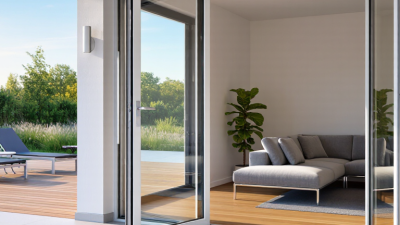
Choosing fiberglass patio doors is not simply a matter of matching color to your walls. The right choice affects daylight, ventilation, security, energy use, and daily comfort. In real homes, small details matter. A low threshold may help someone carrying groceries, while a poorly sealed frame can admit drafts during winter storms. Fiberglass offers strength, dimensional stability, and resistance to moisture, but product quality still varies. Look beyond attractive photographs.
Begin by studying the opening, climate, and way your household uses the room. Measure the rough opening carefully, including height, width, and wall depth. Consider whether the door faces strong afternoon sun, driving rain, or salty coastal air. Check the manufacturer’s ratings for air leakage, water resistance, structural performance, and glass efficiency. Certified testing is more dependable than vague marketing language. A local installer can also identify drainage problems or framing damage before installation begins.
Think about operation, too. Sliding panels save interior space, while hinged doors may provide a wider clear opening. Test the rollers, handles, locks, and screens in person if possible. They should feel smooth, not flimsy. Choose insulated glass suited to your climate, and ask how the frame, sill, and flashing work together. There is no perfect door. A highly secure model may cost more or require stronger hardware. A beautiful design may need frequent cleaning. Compare warranties, maintenance requirements, installation quality, and replacement-part availability before deciding. Your final choice should fit the house, not just the showroom.
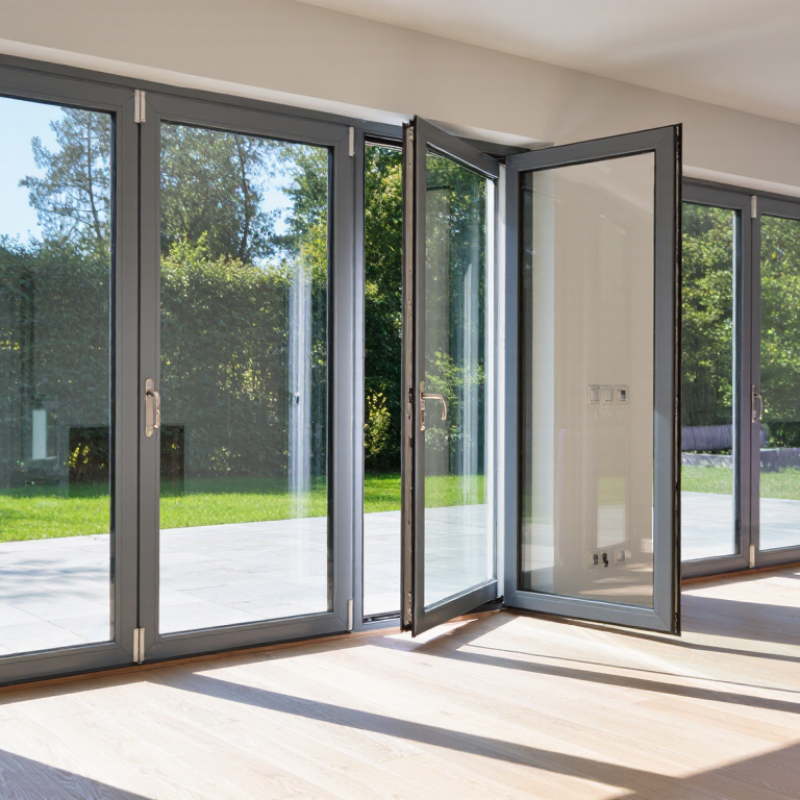
Fiberglass patio doors are built from glass fibers embedded in a polymer resin. This structure creates a rigid, moisture-resistant frame around insulated glass panels. Unlike wood, fiberglass does not readily swell after rain or rot near a damp threshold. It also expands and contracts less than many materials during temperature changes.
That stability matters in daily use. A properly installed door should slide smoothly, seal tightly, and remain aligned through seasonal weather. The U.S. Department of Energy reports that windows and doors can account for about 25–30% of residential heating and cooling energy use. Fiberglass cannot solve every comfort problem, though. Glass area, weatherstripping, installation quality, and local climate still influence performance.
When choosing a fiberglass patio door, check its National Fenestration Rating Council label. A lower U-factor indicates better insulation, while a lower or higher solar heat gain coefficient may suit different climates. Ask for tested air-leakage and water-penetration performance under applicable fenestration standards. Look closely at the sill, rollers, drainage paths, and locking points. These small parts often decide whether a beautiful door feels reliable after years of use.
Real homes are rarely perfect test chambers. A shaded opening may need different glazing from a west-facing opening. I would also inspect the installation plan, not only the frame sample. A strong product can still perform poorly when the sill is uneven or flashing is incomplete.
Choosing a fiberglass patio door starts with your home’s shape, not a catalog photo.
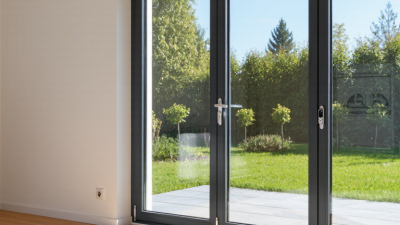
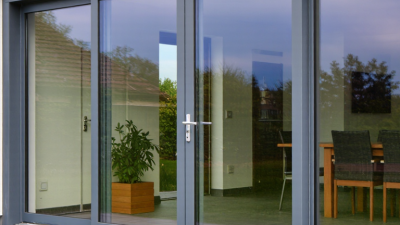
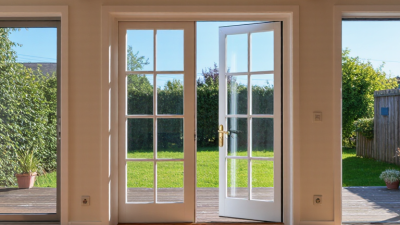
A wide, low room often suits a two-panel sliding door. It preserves furniture space and frames the garden like a long picture. French-style hinged doors feel better in traditional rooms or narrow openings. Their central meeting rail adds symmetry, but each panel needs clear swing space. Measure rugs, chairs, and walking paths before deciding. Small detail, big consequence.
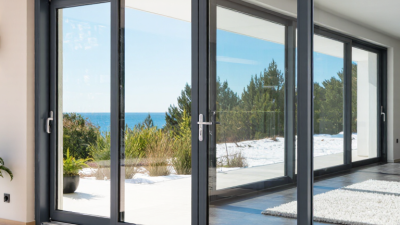
For contemporary homes, a three- or four-panel multi-slide system can open a broad wall. It brings strong daylight and creates a smoother connection to a deck. However, larger glass areas demand attention to solar heat, drainage, and structural support. Select insulated glazing suited to your climate, and ask how the sill handles wind-driven rain. Professional installers should verify rough-opening dimensions, plumb, level, and flashing instead of relying on foam alone. Foam is not drainage.
Fiberglass works across many styles because it can hold crisp lines, painted colors, and textured finishes with limited seasonal movement. A dark frame may sharpen a pale exterior, while a warm neutral can soften masonry. I once preferred the biggest opening, then noticed it made a compact living room feel exposed. That changed my view: proportion matters more than maximum width. Check hardware reach, screen operation, and the threshold under wet shoes. Visit a local showroom if possible. Photos rarely show sightlines accurately.
Choosing fiberglass patio doors starts with your climate, door orientation, and weather exposure. Energy performance is not just about the frame. Glass often controls indoor comfort. Ask for the U-factor, which measures heat flow through the complete door. Lower numbers generally mean better insulation. Check the solar heat gain coefficient, or SHGC, too. A lower SHGC can reduce summer overheating on sunny elevations. In colder regions, a moderate SHGC may admit useful winter sunlight. Climate changes the answer.
Double-pane insulated glass suits many homes, while triple-pane units offer stronger insulation in severe climates. Look for low-emissivity coatings and inert-gas filling, commonly argon. These features can reduce radiant heat transfer, but they are not magic. Gas performance depends on sealed manufacturing and long-term edge durability. Warm-edge spacers can reduce heat loss around the perimeter. That detail is easy to miss. Large glass areas may still feel cool near the edges.
Compare certified whole-door ratings, not center-of-glass claims. Independent labels can show U-factor, SHGC, visible transmittance, and air leakage. Lower air leakage usually improves comfort beside a windy deck. Installation matters just as much. A well-rated door can perform poorly if the sill is uneven or flashing is incomplete. Confirm drainage paths and weather seals before ordering. I would also inspect condensation risk, although this is where advice can become too general. Indoor humidity, ventilation, and local weather all matter. A showroom sample may look clear, yet the finished opening can feel different at home.
| Comparison Dimension | Basic Double-Pane Fiberglass Patio Door | Low-E Double-Pane Fiberglass Patio Door | Advanced Triple-Pane Fiberglass Patio Door | What to Look For |
|---|---|---|---|---|
| Energy Efficiency Performance | ||||
| Typical Whole-Door U-Factor | Approximately 0.30–0.35 Btu/h·ft²·°F | Approximately 0.25–0.30 Btu/h·ft²·°F | Approximately 0.18–0.25 Btu/h·ft²·°F | Lower values indicate better resistance to heat transfer. Compare the whole-door rating rather than glass-only performance. |
| Typical Solar Heat Gain Coefficient | Approximately 0.55–0.70 | Approximately 0.25–0.55, depending on the Low-E coating | Approximately 0.20–0.45, depending on the glass specification | Choose a lower SHGC for hot, sunny climates. A moderate or higher SHGC may provide useful passive solar heat in colder climates. |
| Visible Transmittance | Approximately 0.65–0.75 | Approximately 0.45–0.70 | Approximately 0.35–0.65 | Higher VT allows more natural daylight. Heavier coatings and additional glass layers can reduce visible light. |
| Air Leakage | Commonly around 0.20–0.30 cfm/ft² when tested | Commonly around 0.15–0.25 cfm/ft² when tested | Commonly around 0.10–0.20 cfm/ft² when tested | Lower air-leakage values generally improve comfort. Weatherstripping, installation, and panel alignment are equally important. |
| Condensation Resistance | Often moderate, especially in cold weather | Generally improved because the interior glass surface stays warmer | Generally the strongest option when the frame and spacer system are also thermally optimized | Use the NFRC condensation-resistance rating when available. Higher ratings indicate better resistance to interior condensation. |
| Frame Thermal Performance | Insulated fiberglass frame with standard thermal breaks | Insulated fiberglass frame with improved edge and sill design | Insulated fiberglass frame with enhanced thermal breaks and insulated sill components | Look for continuous insulation, a thermally improved sill, and well-sealed joints around the frame. |
| Glass and Glazing Options | ||||
| Clear Double-Pane Glass | Lowest initial cost | Not applicable | Not applicable | Provides basic insulation but usually has higher heat gain and lower energy performance than coated glass. |
| Soft-Coat Low-E Glass | Available in selected configurations | Common high-efficiency choice | Often used as part of a high-performance package | Reduces radiant heat transfer and can improve insulation. The coating should be protected inside the sealed insulating-glass unit. |
| Hard-Coat Low-E Glass | Available in selected configurations | Good balance of durability and solar control | Available in selected configurations | Usually more durable during handling and can be useful where moderate solar control and daylight are priorities. |
| Solar-Control Low-E Glass | Available in selected configurations | Recommended for strong sun exposure | Recommended for high cooling-load climates | Helps limit solar heat gain and fading but may reduce visible light compared with clear or mild Low-E glass. |
| Argon Gas Fill | Optional or commonly available | Commonly recommended | Commonly used between glass layers | Argon can improve insulating performance compared with air when the sealed unit is properly manufactured and maintained. |
| Krypton Gas Fill | Less common | Available for narrower cavities | Useful in high-performance or limited-space glazing systems | Krypton can provide strong insulation in smaller gaps but usually costs more than argon. |
| Laminated Glass | Optional upgrade | Optional upgrade | Optional upgrade | Improves sound reduction and safety because the inner layer helps hold broken glass together. It does not automatically provide the lowest U-factor. |
| Tempered Glass | Common safety requirement | Common safety requirement | Common safety requirement | Tempered glass is heat-treated to increase strength and break into smaller pieces. Verify local safety-glazing requirements for patio doors. |
| Warm-Edge Spacer | Standard metal spacer may be used | Composite or stainless-steel spacer commonly available | Warm-edge spacer strongly recommended | Warm-edge spacers reduce heat transfer at the glass perimeter and can help reduce edge condensation. |
| Selection and Application Factors | ||||
| Cold Climate Suitability | Acceptable for mild conditions | Good choice for most homes | Best insulation potential | Prioritize a low U-factor, low air leakage, warm-edge spacers, and a thermally improved sill. |
| Hot or Sunny Climate Suitability | May allow excessive solar heat gain | Good with solar-control Low-E glass | Good with low-SHGC glass | Prioritize a low SHGC, exterior shading, and an orientation-appropriate glass package. |
| Noise Reduction Potential | Basic improvement over a single pane | Moderate improvement | Better potential, especially with laminated glass and different glass thicknesses | For sound control, compare STC or OITC ratings rather than relying only on the number of panes. |
| Expected Maintenance | Low; inspect seals and weatherstripping regularly | Low; clean glass and inspect seals and rollers | Low; replacement units may have higher service costs | Fiberglass resists moisture and warping, but tracks, rollers, gaskets, and perimeter sealants still require periodic care. |
| Best Overall Buying Strategy | Choose when budget is the main concern and climate is moderate | Best balance of cost, comfort, daylight, and efficiency | Choose when maximum insulation, condensation control, or noise reduction is a priority | Compare certified whole-door U-factor, SHGC, air leakage, visible transmittance, and installation details before deciding. |
Note: Performance ranges are representative estimates for common fiberglass patio-door configurations. Actual values vary by door size, glazing thickness, coating, gas fill, spacer, frame design, hardware, and installation quality. Always verify the product's certified NFRC ratings and local energy-code requirements.
Fiberglass patio doors should be judged by performance, not appearance alone. The U.S. Department of Energy reports that windows can cause 25–30% of residential heating and cooling energy use. Therefore, inspect the door’s NFRC label for U-factor and solar heat gain coefficient ratings. Lower U-factor usually means better insulation. A well-sealed frame should feel solid, not cold or drafty, around the corners.
Durability begins with dimensional stability. The DOE’s Building America Solution Center identifies fiberglass as resistant to moisture-related swelling and warping. Still, poor installation can defeat good material. Check whether the sill drains correctly and whether the rollers move without grinding. The National Association of Home Builders also lists weather exposure as a major factor in component service life. Coastal salt, standing water, and intense sunlight demand closer inspection. Fiberglass is strong, but not invincible.
Security requires more than thick glass. Look for laminated glazing, reinforced strike areas, anti-lift features, and locks tested under recognized residential security standards. The FBI’s Crime Data Explorer continues to identify burglary as a recurring property-crime category, so the frame-to-wall connection matters. I would not treat a high laboratory rating as a guarantee. A loose strike plate can undermine it. Maintenance is modest: clean tracks, inspect gaskets, lubricate approved hardware, and clear drainage paths twice yearly. Avoid harsh solvents. Small neglect becomes expensive.
How to Choose Fiberglass Patio Doors?
Start with the opening, not the catalog photo. Measure width and height at three points, then record the smallest dimensions. Check the sill for rot, slope, and water staining. A common 72-by-80-inch opening may still require a custom frame. Allow space for shims and insulation. A tight fit can create expensive installation problems.
Choose features according to the room’s exposure. Low-E glazing can reduce unwanted heat transfer, while a lower SHGC may suit sunny, hot climates. The U.S. Department of Energy reports that windows account for about 25–30% of residential heating and cooling energy use. A glazed patio door deserves similar attention. Use the NFRC label to compare U-factor, SHGC, visible transmittance, and air leakage. Consider multi-point locks, tempered glass, adjustable rollers, and a raised sill. Small details matter.
Installation method changes the risk. A replacement installation keeps the existing frame when it remains square, dry, and structurally sound. A new-construction installation exposes the rough opening and allows better flashing inspection. The American Architectural Manufacturers Association emphasizes proper water management and installation practices for fenestration products. Follow the manufacturer’s instructions and local building requirements. Do not hide damaged framing behind new trim. That shortcut is tempting. It can fail quietly. A qualified installer should confirm plumb, level, drainage, and smooth operation before sealing the interior. I would also test the door after temperature changes, because a flawless first-day fit can still need adjustment.