2026 Best Fiberglass Patio Doors for Global Buyers

Choosing the best fiberglass patio doors in 2026 requires more than comparing frame colors and glass packages. Global buyers face different climates, installation practices, and energy standards. A coastal home in Florida needs salt-air resistance and reliable drainage. A winter property in Canada needs low U-values, tight weatherstripping, and strong thermal performance. Fiberglass patio doors can address these demands because they resist warping, rotting, and temperature-related movement. Still, no door is perfect.

Industry research supports continued demand for durable, energy-conscious fenestration. Grand View Research’s recent doors market analysis points to replacement activity and energy efficiency as major growth drivers. The U.S. Department of Energy also recommends evaluating U-factor, solar heat gain coefficient, air leakage, and visible transmittance. NFRC-certified ratings make comparisons more dependable across manufacturers. These numbers matter more than attractive showroom displays.

Dr. Joseph Lstiburek, a respected building-science expert, has warned, “Water is the most destructive force in buildings.” His point applies directly to fiberglass patio doors. Even a high-quality frame can fail when flashing, sill pans, or drainage paths are poorly installed. This guide examines leading 2026 models through a practical lens. It considers thermal ratings, glass options, hardware, accessibility, warranty support, and regional availability. I would not choose by brand reputation alone. Installation evidence matters. The strongest product may still disappoint beside a poorly prepared opening. Global buyers should question marketing claims, verify testing data, and inspect the threshold before signing an order.
2026 Best Fiberglass Patio Doors for Global Buyers

Fiberglass Patio Doors: Structure, Types, and Core Benefits

Fiberglass patio doors combine a rigid frame with glass panels designed for frequent outdoor use. Their structure often includes pultruded fiberglass profiles, internal reinforcement, weather seals, and insulated glass units. This construction resists moisture, warping, and temperature changes better than many traditional materials. Still, installation quality matters greatly. A strong frame cannot correct poor drainage or uneven wall openings.

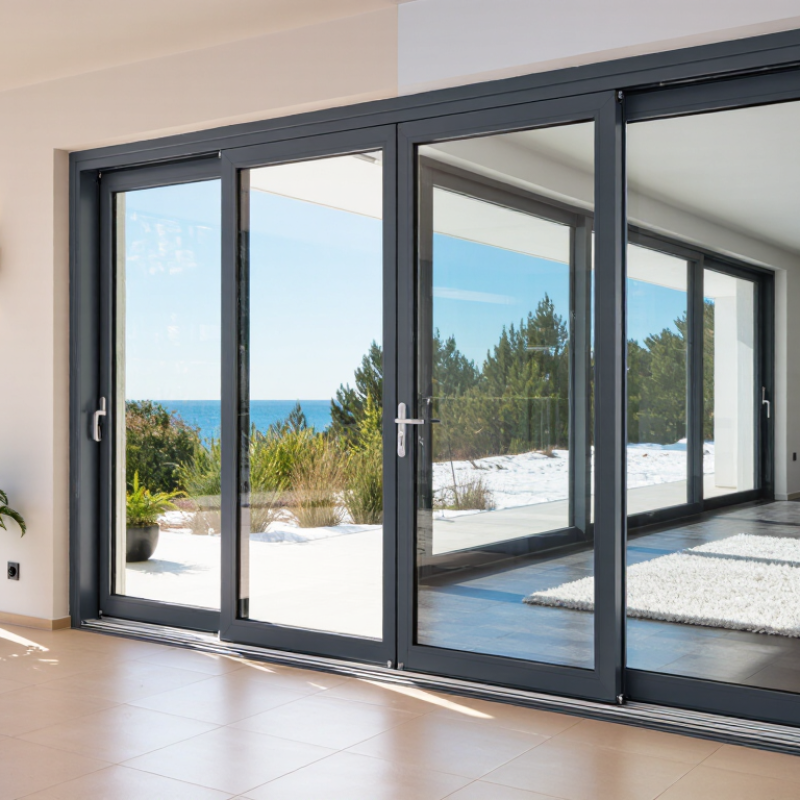
Common types include sliding, hinged, folding, and multi-panel patio doors. Sliding doors save interior space and suit compact rooms. Hinged doors provide a familiar entry feel and can support wider opening angles. Folding systems create a larger connection with patios, but they need accurate alignment and stronger hardware. For global buyers, glass selection should match local climate, wind exposure, energy rules, and security expectations. Low-emissivity glass may improve indoor comfort, while laminated glass can reduce injury risks after breakage.

Tips: Check frame reinforcement, drainage paths, gasket quality, and hardware corrosion resistance. Ask for tested thermal and air-performance data. Confirm installation tolerances before ordering. Small details matter.

Fiberglass usually requires limited maintenance and keeps its shape through seasonal changes. Its stable surface can also hold durable finishes with less repainting. Yet, it is not automatically the best choice for every project. Some systems feel heavier, cost more, or require specialized installers. I have found that performance claims can differ between laboratories and real buildings. Independent test reports and a careful site inspection remain essential.
Key Performance Standards for the Best Fiberglass Patio Doors in 2026

For global buyers, the best fiberglass patio doors in 2026 should meet measurable performance standards, not merely look modern. The U.S. Department of Energy estimates that windows and doors can cause 25–30% of residential heating and cooling energy use. Therefore, verify the NFRC-certified U-factor and solar heat gain coefficient. Lower U-factor improves insulation, while SHGC must match the climate. A sunny coastal home needs different glazing from a cold northern apartment.

Air leakage matters too. Ask for tested results under recognized FGIA/AAMA/WDMA/CSA 101 standards. Lower leakage supports comfort near the handle and meeting rails. Water resistance is equally important. Testing should include wind-driven rain, especially for exposed balconies and tropical regions. Check the performance grade and pressure rating, not just the frame material.

Installation remains the weak point. Often overlooked. A high-performing fiberglass frame can still leak through an uneven sill, poor flashing, or compressed weather seals. The International Energy Conservation Code and NFRC labeling provide useful benchmarks, but local exposure may demand more. For salt-air locations, request corrosion-resistant hardware and documented finish testing. Condensation resistance deserves attention in humid climates. I would not choose a door from U-factor alone; real buildings behave imperfectly, and installation quality can erase laboratory advantages.

2026 Best Fiberglass Patio Doors for Global Buyers - Key Performance Standards for the Best Fiberglass Patio Doors in 2026

Global performance comparison framework for fiberglass patio doors
Performance Dimension Recommended 2026 Benchmark Relevant Test Method or Standard Why It Matters to Global Buyers Preferred Verification Evidence
Thermal Insulation Whole-door U-factor at or below 1.6 W/m²·K; high-performance projects may target 1.0 W/m²·K or lower. ISO 10077-1, EN ISO 12567-1, NFRC 100, or an equivalent accredited laboratory procedure. Lower U-factor reduces heat transfer and supports energy efficiency in both heating and cooling climates. Certified whole-product U-factor report, including frame, sash, glass, spacer, and hardware.
Solar Heat Gain Select SHGC according to climate: approximately 0.25–0.40 for many cooling-dominated regions and approximately 0.40–0.60 where passive solar heat is beneficial. ISO 15099, EN 410, NFRC 200, or an equivalent calculation and testing method. A suitable SHGC helps control overheating while preserving useful daylight and winter solar gains. Product-specific SHGC, visible transmittance, and glazing configuration data.
Air Leakage Prefer tested air leakage at or below 0.3 L/s·m² at 75 Pa, where the applicable regional rating system uses this metric. ASTM E283, EN 1026, EN 12207, or an equivalent national standard. Lower leakage improves comfort, reduces drafts, and limits uncontrolled energy loss. Laboratory report showing test pressure, specimen size, leakage rate, and rating class.
Watertightness Use a water-resistance class or pressure rating appropriate to the building height, exposure, and local rainfall; exposed façades should use higher tested ratings. ASTM E331, EN 1027, EN 12208, or an equivalent regional method. Weather-resistant sills, gaskets, drainage paths, and flashing reduce the risk of interior water damage. Water-penetration test report and installation details for sill pan, weep paths, and perimeter flashing.
Wind and Structural Resistance Specify a design pressure based on local wind speed, building height, terrain, opening size, and exposure; coastal and hurricane regions require project-specific higher ratings. ASTM E330/E330M, EN 12211, EN 12210, or the applicable national building code. The frame, panels, rollers, locks, and fasteners must remain functional under positive and negative wind pressure. Structural test report stating maximum tested pressure, deflection, permanent deformation, and operability results.
Glass Safety Use safety glazing in hazardous locations; tempered or laminated glass should be selected according to impact, fall, and local code requirements. EN 12150 for thermally toughened glass, EN 14449 for laminated glass, ANSI Z97.1, or 16 CFR 1201 where applicable. Safety glazing reduces injury risk if the glass is impacted or broken. Glass markings, conformity documentation, safety-glazing certificates, and location-specific compliance records.
Acoustic Performance For urban or transport-exposed sites, consider a tested sound reduction rating of approximately Rw/STC 30–40 or higher, subject to project requirements. ISO 10140, ISO 717-1, ASTM E90, and ASTM E413. Laminated glass, insulated glazing, tight seals, and correctly installed frames can reduce outdoor noise. Tested laboratory rating for the complete door assembly, not glass-only data.
Operation and Accessibility Smooth operation after durability testing, stable panel alignment, adjustable rollers, and threshold options compatible with accessibility requirements. Applicable provisions of EN 13115, EN 1191, AAMA/WDMA/CSA 101/I.S.2/A440, and local accessibility codes. Large patio panels must remain easy to open, close, lock, and maintain throughout their service life. Cyclic-operation results, operating-force data, roller adjustment instructions, and maintenance schedule.
Security and Forced-Entry Resistance Use multi-point locking, anti-lift protection, mechanically secured rollers, and laminated glass where enhanced security is required. EN 1627–1630 resistance classes, PAS 24, or the applicable national security standard. Sliding doors require protection against panel lifting, lock manipulation, and attack at the meeting stile. Complete-assembly security test certificate and documented lock, keeper, anti-lift, and glass specifications.
Fiberglass Frame Durability Require weather-resistant pultruded or composite fiberglass components with stable joints, UV-resistant finishes, and documented dimensional stability. Material-specific procedures may include ASTM D638, ASTM D790, ASTM D2244, ASTM G154, and relevant product durability standards. Fiberglass composites generally offer low thermal expansion, corrosion resistance, and good dimensional stability when properly engineered. Material technical data, accelerated weathering results, coating warranty terms, and finished-product durability testing.
Condensation Control Prioritize warm-edge spacers, insulated frames, effective drainage, and a low condensation risk factor for cold or humid climates. ISO 10211, ISO 13788, AAMA 1503, or an equivalent thermal and condensation assessment. Reducing interior-surface condensation helps protect finishes, furnishings, and indoor air quality. Condensation-resistance or surface-temperature report for the specified frame and glazing combination.
Environmental and Product Documentation Provide transparent material declarations, recyclability information, installation instructions, spare-part availability, and regional compliance documentation. ISO 14025, EN 15804, EPD procedures, REACH, RoHS, and applicable national product regulations. Clear documentation simplifies specification, customs review, installation, maintenance, and end-of-life planning. Environmental Product Declaration where available, safety data, declarations of conformity, and installation manuals.
Buyer note: Performance values are reference benchmarks rather than universal legal requirements. Final selection should be based on the destination country's building code, climate zone, wind exposure, opening dimensions, installation method, and complete-door laboratory certification.

How to Compare Fiberglass Patio Door Designs and Features

2026 Best Fiberglass Patio Doors for Global Buyers

How to Compare Fiberglass Patio Door Designs and Features

A strong comparison starts with the opening, not the color. Measure width, height, wall depth, and sill height carefully. Fiberglass frames resist swelling, rot, and seasonal movement. That matters in humid coasts and places with sharp temperature changes. Still, quality varies between products.

Compare sliding, hinged, and folding designs by daily use. Sliding doors save interior space and suit narrow rooms. Hinged doors usually provide a wider clear opening. Folding systems can connect indoor and outdoor areas, but they require accurate installation. Check the track, rollers, hinges, and locking points. Smooth operation should not depend on excessive force.

Glass selection affects comfort more than many buyers expect. Look for insulated glazing, low-emissivity coatings, and suitable solar-control performance. In cold regions, warmer edge spacers may reduce condensation. In hot climates, excessive solar gain can raise cooling costs. Ask for tested air, water, and structural performance. Regional certification may also be required.

Inspect the sill design before ordering. A low sill improves access but may need stronger drainage planning. Confirm screen compatibility, replacement hardware, and cleaning access. I once focused too much on appearance and overlooked the door’s drainage path. That mistake was expensive to correct. Warranty language deserves equal attention, especially for international shipments. Compare coverage, installation limits, and service responsibility in writing.

Global Buyer Guide: Climate, Codes, Sizing, and Energy Ratings

2026 Best Fiberglass Patio Doors for Global Buyers

Choosing a fiberglass patio door requires more than comparing frame colors and glass options. Climate should guide the entire specification. In coastal regions, check corrosion-resistant hardware, sealed corners, and drainage details. In cold climates, prioritize low U-factor glass and insulated frames. Hot regions may benefit from lower solar heat gain coefficients, especially on west-facing walls. Fiberglass resists swelling, but installation quality still matters.

Building codes differ across countries, cities, and even coastal zones. Confirm wind-load, impact, safety-glazing, fire-separation, and accessibility requirements before ordering. Ask for test reports that identify the exact glass package and operating size. Energy labels may use different standards, so avoid comparing numbers without checking the testing method. A lower U-factor generally means better insulation, but air leakage and installation gaps also affect comfort.

Measure the rough opening at the top, middle, and bottom. Record width, height, wall depth, sill slope, and exterior drainage conditions. Use both millimeters and inches when communicating with overseas suppliers. A door can perform well on paper and still leak through a poorly prepared sill. No checklist is perfect. I have seen carefully measured openings change after flooring, plaster, or structural repairs. Confirm the final dimensions late, not only at the design stage. Include replacement hardware, screens, local delivery limits, and service access in the purchase plan.

2026 Best Fiberglass Patio Doors for Global Buyers

Climate, Codes, Sizing, and Energy Ratings

The chart shows maximum U-factor targets for residential glass doors under ENERGY STAR Version 7 regional criteria. A lower U-factor indicates better resistance to heat transfer. Buyers should confirm local building-code requirements, glazing area limits, installation details, and metric U-values before selecting a fiberglass patio door.

Solar Heat Gain Coefficient targets also vary by region: Northern regions have no minimum SHGC requirement, North-Central requires at least 0.40, South-Central at least 0.25, and Southern regions at least 0.23. These values are useful for comparing energy performance, but local codes and whole-window or whole-door test results should take priority.

Reference: ENERGY STAR Residential Windows, Doors, and Skylights Version 7.0 criteria.

Installation, Maintenance, Warranty, and Long-Term Ownership Costs

For global buyers, fiberglass patio-door ownership begins with correct installation, not the showroom price. The U.S. Department of Energy reports that windows account for roughly 25–30% of residential heating and cooling energy use. Patio doors are part of this exposed glass area. A poor sill pan, uneven opening, or weak flashing can cause drafts and hidden water damage. Ask installers to document shimming, drainage, air sealing, and local wind-load requirements. NFRC labels help compare U-factor and solar heat gain coefficient across markets.

Maintenance is usually simple, but neglect is expensive. Clean tracks every few months, inspect weatherstripping annually, and keep drainage holes open. Salt air, intense sunlight, and freeze-thaw cycles can shorten hardware life. The NAHB Study of Life Expectancy of Home Components places many window systems within a broad 15–30-year service range. Fiberglass may perform well, yet installation quality and climate remain decisive. That range feels too general for every country. It should be treated as a planning guide, not a promise.

Tips: Request a written warranty schedule before purchase. Check separate coverage for frames, insulated glass, finish, hardware, labor, and transfer rights. Confirm who pays for removal, shipping, and site visits. Compare the warranty with expected maintenance costs, replacement seals, and energy savings. A lower U-factor may reduce cooling or heating demand, but the result depends on orientation, glass area, shading, and installation. Keep dated photographs and service records. They can support warranty claims and reveal recurring problems early.