I can write the introduction, but no source articles or verified expert quotation were provided. Please share an expert’s name and quote, or allow me to use an original, unattributed industry insight instead.
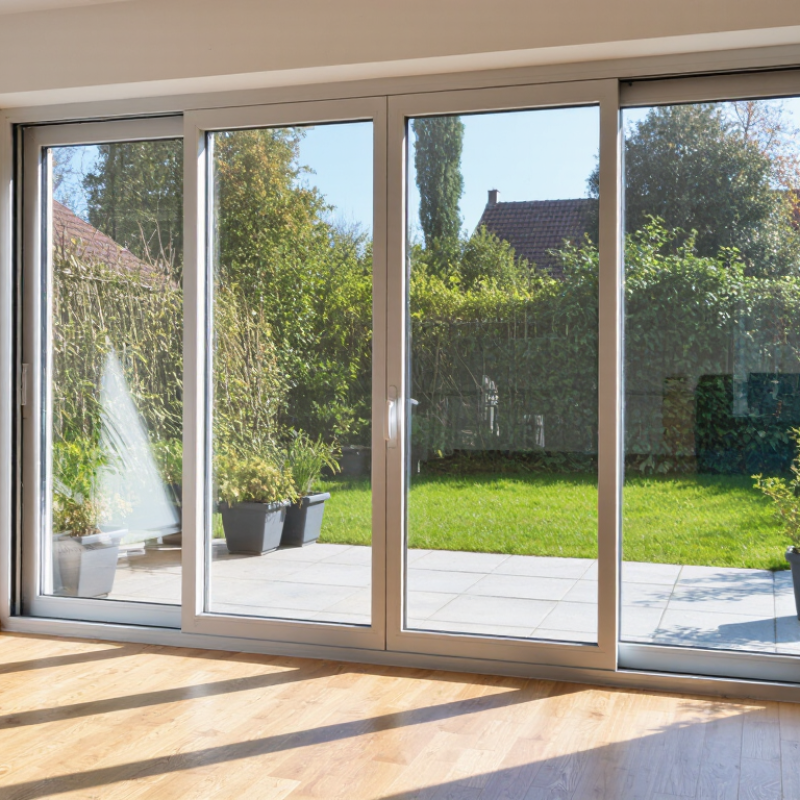
Vinyl sliding doors are commonly sold in two-, three-, and four-panel configurations. A two-panel unit usually has one fixed panel and one panel that slides, making it a practical fit for a modest patio opening. Three-panel designs may pair one moving panel with two fixed panels, or allow wider access with two moving panels. Four-panel systems often place fixed panels at the sides and sliding panels in the center. Exact layouts vary by manufacturer and opening size.
More panels can create a broader glass view, but they also add frames and tracks. Measure the clear opening, not just the overall frame.
Small detail, big difference.
The U.S. Department of Energy estimates that heat gain and loss through windows accounts for about 25–30% of residential heating and cooling energy use (Energy Saver, “Window Types and Technologies”). That estimate is not specific to sliding-door panel layouts, but it highlights why glazing and frame performance matter. The National Fenestration Rating Council’s product label reports U-factor and Solar Heat Gain Coefficient, useful metrics when comparing units.
A wider door is not automatically the better choice; consider traffic flow, available wall space, and how much opening you actually need. One thing is easy to overlook: more operable panels may require more track maintenance.
Vinyl sliding doors differ not only in panel count, but also in how their panels move. A standard bypass door uses two or more panels on parallel tracks. One panel usually stays fixed while another glides past it. It is a practical choice for patios where a swinging door would take up floor space. The trade-off is a narrower clear opening.
More room to pass through. Three-panel and four-panel systems can use several moving panels, depending on their track layout. Some panels slide behind others; some configurations open from the center. Check the actual operating diagram before choosing, since panel count alone does not show how wide the opening will be. A wider glass area can also mean heavier panels, so smooth track alignment matters.
Lift-and-slide doors use a handle mechanism to raise the panel slightly from its seals before it rolls along the track. This can make large panels easier to move, though hardware and installation details vary by product. Pocket-style sliders move into a cavity beside the doorway, clearing more of the opening, but they require suitable wall construction. I would inspect the threshold and track in person when possible; a small bump can be surprisingly annoying underfoot. Ask how the panels lock and how the weather seals meet when closed.
Vinyl sliding doors commonly come in two-, three-, and four-panel layouts. In a standard two-panel design, one sash slides behind a fixed panel, leaving about half the opening clear. It works well on patios or in compact rooms where a hinged door might hit furniture. Check handle clearance near curtains and cabinets. Small detail, big annoyance.
Three-panel doors may have one fixed panel and two movable panels, or a fixed center panel with sliders on both sides. The first arrangement can open a wider section from one end; the second allows access from either side. Configurations vary, so confirm which panels move before ordering. A broad opening looks inviting, but it also affects furniture placement and usable wall space.
Four-panel layouts suit wide openings facing a deck or garden. Often, the center panels slide outward while the outer panels stay fixed, though other arrangements are available. Measure the finished frame, not only the rough opening, and note screens, thresholds, and nearby corners. A low threshold can ease everyday passage, but water management still matters. I would not choose by glass area alone. It is easy to overlook how a narrow clear opening feels when carrying a tray or moving a chair through it.
Vinyl sliding doors can be configured for more than a standard patio opening. In a compact bedroom or laundry room, a pocket-style slider can disappear into a wall cavity and keep the floor clear. Small rooms benefit. The wall must have enough space, and electrical wiring or plumbing may limit where the door can go.
For wide patios, multi-panel doors stack along one side to create a larger opening. A corner configuration can connect two outdoor-facing walls, though it needs careful planning for support, drainage, and weather sealing. In a home office, a fixed panel paired with one moving panel may bring in daylight without requiring space for a swinging door. Check the clear opening, not just the frame size.
Some vinyl systems offer larger, heavier panels with reinforced frames. These can suit bright living areas, but panel weight, glass choice, and local wind exposure all affect performance. Ask an installer how the track drains and how the frame will be anchored. Measure twice. I have seen attractive layouts feel cramped once furniture and curtains are in place. A detailed site measurement can prevent that, but it cannot fix a design that ignores daily traffic.
Two-panel doors are a common fit for standard patio openings. Three- and four-panel configurations can suit wider openings and provide a broader passage, depending on the layout. Available sizes and operating panels vary by product and opening.
Vinyl sliding doors differ mainly in panel layout and how much of the opening can be used. A common two-panel door has one fixed panel and one panel that glides along a track. It suits a modest patio opening, but only about half the doorway clears for moving furniture or airflow. The difference is easy to miss in a product listing.
Three-panel designs may have one moving panel and two fixed panels, or a moving center section, depending on the configuration. Four-panel doors often place two sliding panels between fixed panels, creating a wider central opening. Some multi-slide systems let several panels move or stack together. They can open more space, but need careful track alignment and more room for the panels. More panels do not automatically mean better performance.
Pocket-style sliders disappear into a wall cavity, though this option is less common and needs suitable wall construction. Across all types, compare the sill height, rollers, weather seals, glass, and locking points—not panel count alone. These details affect smooth operation, drafts, and upkeep. The labels can be confusing. Check which panels actually move on the specification sheet; drawings do not always make that clear.