How to Choose the Best Exterior Sliding Glass Doors
Choosing exterior sliding glass doors is not just a style decision. The right system should move smoothly, seal tightly, and suit the opening and local climate. Glass matters, too. The U.S. Department of Energy’s Energy Saver guidance notes that windows can account for about 25–30% of a home’s heating and cooling energy use. Sliding doors include large glazed areas, so frame quality, weather seals, and glass performance deserve close attention. That figure is a useful warning, not a prediction of your home’s exact savings.
Start with verified performance ratings. The National Fenestration Rating Council (NFRC) label reports values such as U-factor and Solar Heat Gain Coefficient (SHGC), helping shoppers compare products on consistent terms. Lower U-factor generally means less heat transfer; the best SHGC depends on climate, orientation, and shade. Check the door’s tested air-leakage performance, too. A beautiful panel can still feel drafty beside a winter sofa.
Industrial designer Charles Eames put the broader design principle simply: “The details are not the details. They make the design.” For a sliding door, those details include track drainage, locking hardware, screen fit, and accessible operation. Handle the sample if possible. Ask how rollers and seals can be serviced. It is easy to overlook maintenance when the showroom glass is spotless. Yet that small oversight can matter years later. This guide will help you weigh materials, glazing, security, installation, and cost—without assuming one door suits every home.
Define the Rough Opening, Panel Count, and Clear-Opening Width First
Before comparing exterior sliding glass doors, measure the rough opening, not just the old door frame. The rough opening is the space between the surrounding framing members. Measure its width at the top, middle, and bottom, and its height at both sides and the center. Check whether the opening is level, square, and plumb. Small errors matter.
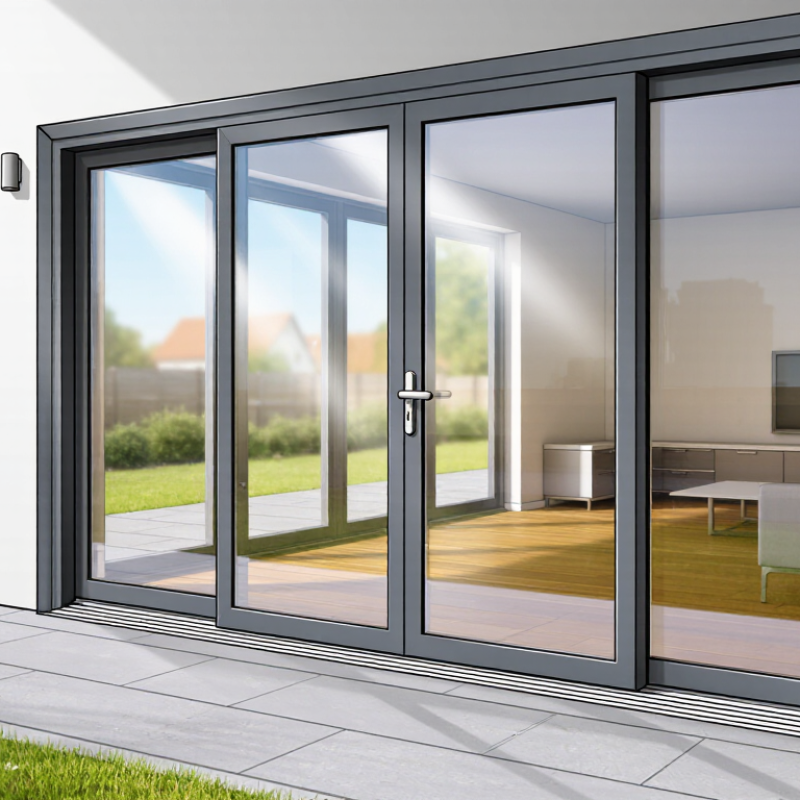
Next, choose the panel count based on the space and how you use it. A two-panel unit often has one fixed panel and one sliding panel. With three or more panels, the moving sections may stack differently, so check which side opens and where each panel travels. It is easy to assume more panels mean more access, but that is not always true.
Compare the clear-opening width, the usable passage when the door is fully open, with the width you actually need. The frame and fixed panels reduce the opening, even when the overall unit looks wide. Measure the path for people carrying a laundry basket or moving a chair through the doorway. Include nearby walls, handles, and screens in your check. Leave the final sizing and installation clearances to the door instructions or a qualified installer; an early measurement can be off.
Compare NFRC U-Factor and SHGC Ratings; SHGC Runs from 0 to 1
For exterior sliding glass doors, compare both NFRC-rated U-factor and solar heat gain coefficient (SHGC). U-factor measures heat transfer; lower values indicate better insulation. SHGC measures how much solar heat passes through the glass, on a scale from 0 to 1. A value near 0 blocks most solar heat, while a value near 1 admits more. The National Fenestration Rating Council’s certified ratings make products easier to compare under consistent testing conditions.
Your climate and exposure matter. In a hot, sunny room, a lower SHGC can help limit afternoon heat, especially on west-facing glass. In a colder climate, a higher SHGC may allow useful winter sun, though it can also cause glare or overheating. The U.S. Department of Energy notes that windows can account for about 25–30% of residential heating and cooling energy use. That figure covers windows broadly, not sliding doors alone. Ratings help, but they cannot capture every home’s shade, curtains, or drafts. I’d check the label and the room’s real sun pattern.
Tips: Compare whole-unit NFRC ratings, not just center-of-glass figures. Stand near the opening at 4 p.m.; if the floor feels hot, prioritize a lower SHGC. Keep the trade-off in view. A lower number is not always better.
Match NAFS Design-Pressure Ratings to Exposure; DP-30 Equals 30 psf
When choosing exterior sliding glass doors, match the NAFS design-pressure rating to the door’s actual exposure. DP-30 means the assembly is rated for a design pressure of 30 pounds per square foot (psf). It does not translate directly into one wind speed or guarantee performance in every storm. A sheltered patio and an exposed upper-floor opening face different demands. Height, surrounding terrain, nearby buildings, and local project requirements all matter.
Tips: Ask for the NAFS documentation and confirm the rating applies to the door’s specified size and configuration. Check both positive and negative pressure requirements. A bigger number is not automatically the right answer.
Before ordering, have a qualified building professional or installer verify the required pressure for the opening. Coastal sites, open fields, and corners of buildings may experience stronger wind effects. The frame, glass, panels, and anchoring also need to work as a tested assembly. DP is important, but it is only one part of the selection. Air and water performance deserve attention too, especially where wind-driven rain is common. The paperwork can feel tedious; still, it is better to catch a mismatch before the door is installed.
Check Air and Water Performance Under AAMA/WDMA/CSA NAFS Tests
When choosing exterior sliding glass doors, ask for test results under AAMA/WDMA/CSA 101/I.S.2/A440, commonly called NAFS. This standard evaluates air leakage, water penetration, and structural performance. A passing label is useful, but the rating must suit your building’s exposure and local conditions. A door facing wind-driven rain needs careful review.
Check the product’s documented performance grade and size tested. NAFS results apply to specific configurations; larger panels or different hardware may perform differently. The U.S. Department of Energy estimates that windows account for 25–30% of home heating and cooling energy use. That figure covers windows broadly, not sliding doors alone, but it shows why leakage deserves attention. I would still inspect the installation details. A strong test rating cannot fix a poorly sealed sill.
Tips: Request the NAFS report, not just a sales claim. Look for air-leakage and water-penetration results, then confirm they match the door size you plan to buy. Check the sill, weatherstripping, and drainage path. Small details matter. A little skepticism helps.
Choose Safety Glazing: Tempered Glass Is About 4× Stronger Than Annealed Glass
How to Choose the Best Exterior Sliding Glass Doors
When choosing exterior sliding glass doors, pay close attention to the glazing. Tempered glass is about four times stronger than annealed glass of comparable thickness, though the exact performance depends on the product and its construction. It is heat-treated to improve strength. If it breaks, it usually crumbles into smaller, less jagged pieces rather than long, sharp shards. That can reduce injury risk, but it does not make the glass unbreakable. I treat the four-times figure as a useful comparison, not a guarantee. Check the glass label and product documentation, and confirm that the glazing suits the door’s location and applicable building requirements.
Tips: Ask whether the glass is tempered, and look for permanent safety-glazing markings. Check that the door’s size, frame, and locking hardware are appropriate for your opening. A strong pane still needs a well-fitted frame.
Think about how people use the doorway. Children, pets, and frequent foot traffic make safety glazing especially worth considering. Also inspect the edges and frame during installation; damaged glass or poor fitting can undermine performance. If specifications are unclear, ask a qualified installer to explain them in plain language. Small details matter, and it is easy to focus on the glass while overlooking the rest of the door.