2026 Top Double Sliding Glass Doors for Global Buyers

Choosing the right double sliding glass doors in 2026 requires more than comparing attractive product photos. Global buyers must examine thermal performance, water resistance, acoustic control, security hardware, and after-sales support. A beautiful frame can still fail when coastal wind, heavy rain, or repeated daily use exposes weak drainage and poor rollers.

Helen Sanders, Ph.D., a recognized fenestration and building-science specialist, offers a practical reminder: “A window or door system performs only as well as its installation and surrounding details.” This principle matters for double sliding glass doors. Buyers should request tested U-values, air-leakage data, impact ratings where relevant, and clear installation instructions. Check the threshold carefully. A low track may improve accessibility, but it needs reliable drainage and accurate site preparation.

This guide reviews leading 2026 options for residential, hospitality, and commercial projects. It considers aluminum, uPVC, timber, and hybrid frames, along with slim sightlines, oversized panels, laminated glass, and smart locking systems. Real-world details matter. Can two people move the panels smoothly? Do the handles remain comfortable after years of use? Is replacement hardware available in the buyer’s region?

No ranking is perfect. Climate, budget, building design, and local workmanship can change the result. Some premium doors look impressive but offer limited value in mild climates. Others seem ordinary, yet deliver dependable performance when correctly installed. Careful comparison remains essential.
2026 Top Double Sliding Glass Doors for Global Buyers

What Double Sliding Glass Doors Are and How They Operate

2026 Top Double Sliding Glass Doors for Global Buyers

What Double Sliding Glass Doors Are and How They Operate

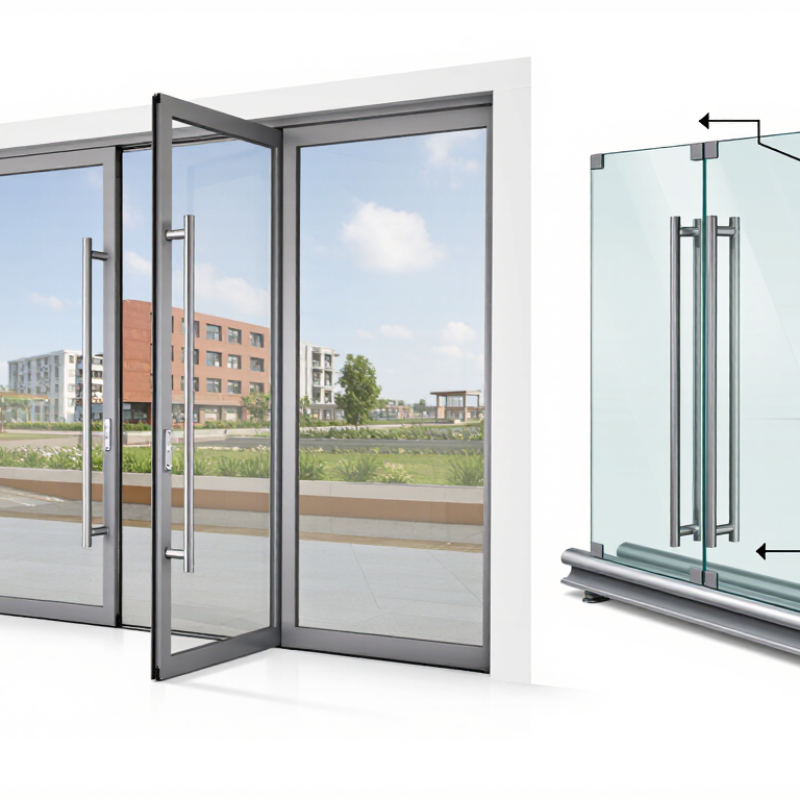
Double sliding glass doors use two large glass panels that move horizontally along parallel tracks. Depending on the design, both panels may slide apart, or one panel may remain fixed. This configuration creates a wide opening without requiring swing space. It suits patios, balconies, retail entrances, and rooms connected to outdoor areas.

Each panel moves on rollers fitted inside the lower frame. When you turn the handle, the panels release from the latch and glide along the track. Vertical seals reduce drafts, while brush seals help limit dust and insects. Tempered or laminated safety glass is commonly selected, but the correct specification depends on climate, building use, and local requirements. Doors are not completely silent. Dust, uneven installation, or worn rollers can cause resistance.

Tips: Check the frame for square alignment before installation. Keep tracks free from sand and standing water. Test the door with one hand; excessive force signals a problem. Ask the installer about drainage, glass performance, locking points, and replacement hardware. These details matter for global buyers, especially when shipping conditions and weather vary. A wider opening looks attractive, but it can increase panel weight and maintenance demands. That trade-off deserves honest consideration.

2026 Top Double Sliding Glass Doors for Global Buyers - What Double Sliding Glass Doors Are and How They Operate

Door Configuration Typical Panel Count Typical Overall Width How It Operates Typical Clear Opening Recommended Application Ventilation Key Buyer Consideration
Two-Panel Sliding Door 2 panels 1,200–2,400 mm One glazed panel slides horizontally behind or in front of the fixed panel. Approximately 50% of the total frame width Balconies, bedrooms, compact patios, and residential renovations Medium Requires less swing space than a hinged door; the fixed panel remains closed.
Three-Panel Center-Opening Door 3 panels 1,800–3,600 mm The center panel or a designated sliding panel moves along the track while the other panels remain fixed or overlap. Approximately 33%–50% of the total frame width Medium-sized living rooms, dining areas, and garden entrances Medium to High Provides a wider visual connection while keeping the frame relatively compact.
Four-Panel Double Sliding Door 4 panels 2,400–4,800 mm Two panels slide toward the center or both movable panels slide in the same direction, depending on the track layout. Approximately 50% of the total frame width Large patios, terraces, hospitality areas, and open-plan homes High Offers a broad opening, but the track, head, and supporting structure must be accurately sized.
Six-Panel Multi-Track Door 6 panels 3,600–7,200 mm Panels slide independently on multiple parallel tracks and can stack behind one another. Approximately 50%–66% of the total frame width Wide residential façades, restaurants, event spaces, and commercial interiors Very High Needs sufficient wall depth for stacking and careful alignment of multiple tracks.
Lift-and-Slide Door 2–6 panels 1,800–7,200 mm Turning the handle lifts the sash slightly off the seals; the panel then rolls on heavy-duty wheels along the track. Approximately 50%–66% of the total frame width Large glazed openings where low operating force and improved sealing are priorities High Usually supports heavier glass units, but it requires precise installation and a structurally sound opening.
Stacking Sliding Door 3–8 panels 2,400–9,600 mm Each panel moves on its own track and gathers at one side, creating a wider usable opening than a standard two-panel system. Approximately 70%–90% of the total frame width High-end residential projects, resorts, cafés, and indoor–outdoor entertainment areas Very High Requires wall or pocket space to receive the stacked panels and a carefully designed drainage system.
Thermally Broken Double Sliding Door 2–6 panels 1,800–7,200 mm Sliding panels move on rollers; an insulating material separates the interior and exterior portions of the frame. Approximately 50%–66% of the total frame width Cold climates, hot climates, air-conditioned interiors, and energy-conscious buildings High Frame insulation, glazing specification, air leakage, and installation quality affect energy performance.
Pocket Sliding Door 2–4 panels 1,500–4,800 mm One or more panels slide into a concealed cavity inside the adjacent wall. Approximately 70%–100% of the total frame width Minimalist interiors, space-saving renovations, and seamless room connections High The wall cavity must be designed to accommodate the panels, hardware, insulation, and maintenance access.

Dimensions are typical planning ranges rather than fixed product limits. Actual sizes, glass thickness, frame material, wind-load resistance, water drainage, thermal performance, and hardware capacity should be confirmed against local building codes, climate conditions, structural requirements, and the selected opening design.
Key Performance Features for Different Global Climates

2026 Top Double Sliding Glass Doors for Global Buyers

Key Performance Features for Different Global Climates

A double sliding glass door must match its climate, not only its appearance. In cold regions, low-emissivity glazing, warm-edge spacers, and thermally broken frames reduce indoor heat loss. During winter checks, feel the frame corners. Cold spots often reveal weak insulation.

Hot, humid regions need solar-control glass, durable seals, and effective drainage. A door facing afternoon sun can heat a room quickly. In coastal areas, corrosion-resistant hardware matters, especially where salt air reaches balconies and patios. Small drainage channels should remain clear after heavy rain.

Windy locations demand strong rollers, reinforced tracks, and tested air resistance. In tropical storms, impact-resistant laminated glass may provide better protection than ordinary panels. Local installation quality still decides much of the result. Even excellent glass performs poorly when the frame is not level.

Dry climates create another problem: dust enters through worn seals and neglected tracks. Regular cleaning helps, but maintenance habits are often underestimated. I have seen beautiful doors fail early because installers ignored floor movement. A perfect system is unlikely. Buyers should compare thermal values, water resistance, acoustic performance, hardware materials, and available service support for their actual weather conditions.

Frame, Glass, and Hardware Options Compared

2026 Top Double Sliding Glass Doors for Global Buyers

For global projects, frame, glass, and hardware determine real performance. The International Energy Agency’s 2024 Buildings report states that buildings use about 30% of global final energy. A thermally broken aluminum frame can reduce conductive heat transfer, especially in hot or cold climates. Timber and composite frames may insulate better, but require stricter moisture control.

Glass selection needs measured values, not attractive descriptions. Low-emissivity double glazing can improve insulation, while solar-control coatings reduce summer heat gain. Check the U-factor and solar heat gain coefficient through an independent rating system, such as NFRC methods. Tempered glass improves impact safety. Laminated glass offers better noise control and retains fragments after breakage. Bigger panels look impressive. They also increase weight and deflection risk.

Hardware quietly decides daily reliability. Stainless-steel rollers, adjustable carriages, and replaceable seals support smoother operation. Coastal buyers should request corrosion testing and compatible fasteners. The European Commission’s Level(s) framework encourages life-cycle thinking, yet many specifications still focus only on purchase price. That is a weakness worth questioning.

Tips: Match frame depth to wall insulation. Confirm drainage paths before ordering. Request tested air, water, and wind results. Ask for spare rollers and seals. A beautiful door that drags after one wet season is not a successful specification.

2026 Top Double Sliding Glass Doors for Global Buyers — Frame, Glass, and Hardware Options Compared

Typical whole-door performance indicators for commonly specified double sliding systems. Lower U-factor indicates better thermal insulation; higher acoustic rating indicates better sound reduction.

Frame Options

Thermally broken aluminum offers slim sightlines and high structural strength. uPVC generally provides strong insulation at a competitive cost. Timber delivers natural appearance and good thermal performance when properly sealed.

Glass Options

Low-emissivity double insulating glass is a common energy-efficient choice. Laminated glass improves safety and acoustic control, while clear double glass provides higher visible light transmission.

Hardware Options

Tandem stainless-steel rollers are suitable for heavier panels. Multi-point locks improve air and security sealing, while adjustable rollers help compensate for installation tolerances.

Values are representative specification ranges commonly used for preliminary comparison. Final performance depends on panel size, glazing build-up, frame geometry, seals, hardware selection, and installation quality.

How to Evaluate Suppliers, Standards, and Total Cost

2026 Top Double Sliding Glass Doors for Global Buyers

How to Evaluate Suppliers, Standards, and Total Cost

A strong supplier should provide tested performance, not attractive photographs. The U.S. Department of Energy reports that windows can cause 25–30% of residential heating and cooling energy use. Ask for verified U-values, solar heat gain coefficients, air leakage, water resistance, and structural-load results.

For North American projects, review AAMA/WDMA/CSA 101/I.S.2/A440 requirements and reports based on ASTM E283, E331, and E330. European projects may require performance evidence aligned with EN 14351-1. Standards are not interchangeable.

Total cost goes beyond the quoted door price. Request separate figures for glass upgrades, packaging, insurance, inland transport, ocean freight, customs, installation, and future hardware. A supplier with a lower factory price may create higher expenses through weak packaging or missing test documents.

DOE guidance also supports low-emissivity glazing and improved frames for energy control, but local climate still matters. A high solar-control coating may reduce cooling loads in hot regions, yet limit winter heat gain in colder areas. I am not fully convinced that the cheapest certified option is the best option.

Tips:

Request a sample corner, hardware cycle data, warranty exclusions, and a video of water testing. Check whether replacement rollers can be shipped locally. Compare three suppliers using the same specification sheet. Keep a 10–15% contingency for installation surprises. A spreadsheet helps, but it can still hide assumptions.

Installation, Maintenance, and Buying Checklist for 2026

For 2026, double sliding glass doors need careful installation, not only attractive styling. The U.S. Department of Energy estimates that windows cause 25–30% of residential heating and cooling energy use. Therefore, buyers should compare U-factor, solar heat gain coefficient, and air-leakage ratings. The National Fenestration Rating Council explains these ratings through standardized product labels. Lower U-factor usually supports better insulation, while SHGC should match the local climate.

Installation starts with a square, structurally supported opening. The sill must slope outward and connect with reliable flashing. Installers should check plumb, level, roller alignment, and drainage before sealing the frame. Small errors become obvious later. A 3 mm gap can affect smooth movement and weather resistance. Tempered or laminated safety glazing should meet local building requirements. In coastal areas, verify corrosion resistance and wind-load performance. The 2023 UNEP Global Status Report for Buildings and Construction states that buildings consume about 30% of global energy and produce roughly 26% of energy-related emissions, making thermal performance a practical buying concern.

Maintenance is simple but often neglected. Vacuum the tracks monthly, wash them with mild water, and avoid abrasive chemicals. Inspect rollers, gaskets, locks, and drainage paths twice yearly. Condensation between panes usually signals failed insulating glass, not ordinary dirt. Ask for replacement hardware availability, tested water and air performance, installation limits, and written warranty terms. Check dimensions twice. I still see projects where buyers choose the widest opening and forget furniture access, cleaning reach, or emergency operation.