What Are the Top 10 Deck Door Manufacturers in China?

Choosing among China’s deck doors manufacturers requires more than comparing catalog photos or factory prices. Buyers need evidence on frame materials, glazing, hardware, weather seals, production capacity, and after-sales support. A polished showroom sample can still hide weak drainage details or inconsistent finishing. The differences matter most after months of sun, rain, and repeated use.

The International Energy Agency and GlobalABC reported that buildings and construction accounted for 34% of global energy demand and 37% of energy- and process-related CO₂ emissions in 2022. These figures describe the wider building sector, not deck doors alone, but they underline why product performance deserves scrutiny. Building scientist Joseph Lstiburek’s reminder, “All buildings are water management systems,” is especially relevant to doors exposed to wind-driven rain. Small details matter. This guide compares ten Chinese manufacturers using practical criteria, including documented product specifications, export experience, customization options, and quality-control information. It does not treat promotional claims as independent proof. Public data is uneven, and company capabilities can change; that is a limitation worth acknowledging. Use the list as a starting point, then request current test reports, finish samples, and project references before making a decision.
What Are the Top 10 Deck Door Manufacturers in China?

How Deck Doors Are Defined and Classified

How Deck Doors Are Defined and Classified

A deck door is a closable opening through a vessel’s deck or deckhouse boundary. Its required performance depends on location, exposure, and the vessel’s design. The key distinction is tightness: weathertight doors resist rain and sea spray, while watertight doors are designed to prevent water passage under specified pressure. ISO 6042:2002 covers weathertight, single-leaf steel doors; it is not a substitute for project-specific design approval. Doors may also be classified by operation, such as hinged or sliding, and by fire integrity under applicable SOLAS and IMO Fire Test Procedures requirements. That boundary is not always obvious.

UNCTAD’s Review of Maritime Transport 2024 reports that seaborne trade reached about 12.3 billion tonnes in 2023, a 2.4% increase. This broad industry figure is not a door-market statistic, but it reflects the scale of shipping where reliable boundary closures matter. In practice, check the door’s location, opening direction, clear dimensions, seal arrangement, and certified rating against the vessel’s drawings. A door that looks robust may still be unsuitable for its assigned boundary.

Tips: Match the specification to the opening, not just the product name. Confirm test records and installation details, especially gasket compression and frame alignment. Small fitting errors matter. A useful reminder: “watertight” and “weathertight” are not interchangeable.


Criteria for Evaluating Chinese Deck Door Manufacturers

When comparing Chinese deck door manufacturers, begin with the door’s exposure, not a polished catalog. Salt air, driving rain, and strong sun can stress frames, seals, and finishes differently. Ask what materials are used for the frame, threshold, glazing, and fasteners. Request test reports tied to the exact model, not a similar product. Small distinction.

A reliable evaluation checks measurable details: air and water resistance, wind-load performance, thermal movement, drainage paths, and locking strength. Ask how quality is inspected during production, and whether sample dimensions match the order. Check any claimed certifications with the issuing organization. Review drawings, packaging, lead times, and replacement-part support. One sample is useful, but it cannot prove every production run will match.

Communication is evidence too. A capable supplier should explain tolerances, installation clearances, and maintenance needs in plain language. Compare written specifications, not only price or attractive showroom displays. Confirm who handles damage claims and how quickly parts can be supplied. I would still leave room for uncertainty: factory visits and reports offer useful signals, yet neither guarantees long-term performance. That caveat matters.

Profiles of the Top 10 Deck Door Manufacturers in China

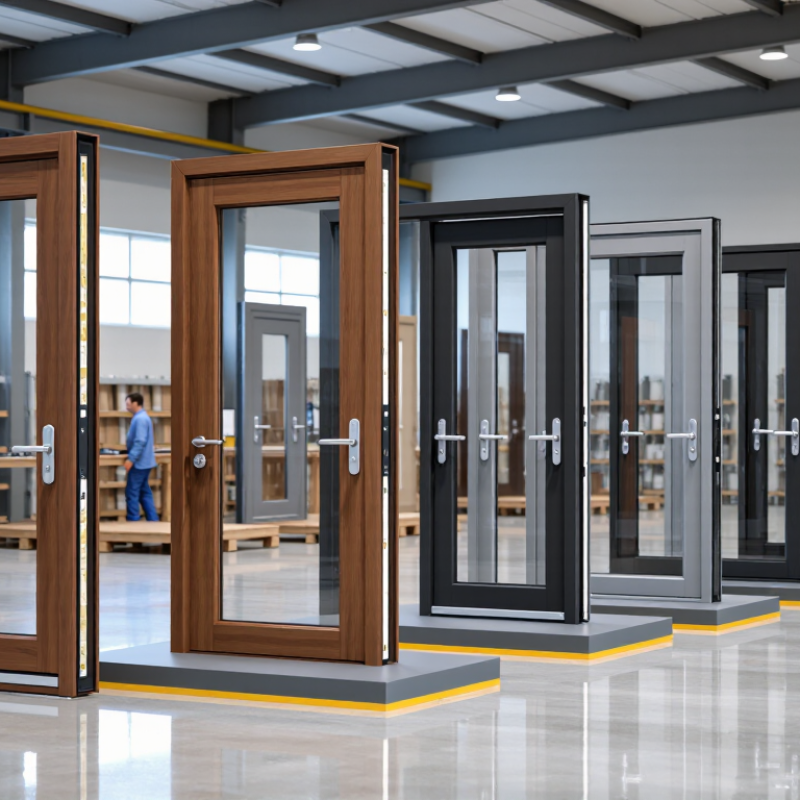
Profiles of China’s leading deck-door manufacturers should compare what buyers can inspect: frame materials, glazing options, sealing details, and production flexibility. Some factories specialize in aluminum systems with thermal breaks; others focus on uPVC or wood-aluminum frames. A sample corner joint tells a lot. So does a door tested through repeated opening and closing.

The National Bureau of Statistics of China reported 998.31 million square meters of completed real-estate floor space in 2023, up 17.0% year over year. This is broad construction data, not a deck-door sales figure, but it helps explain why supplier capacity and delivery planning matter. Profiles should also note glass specifications, drainage design, hardware choices, and whether custom dimensions are available. Ask for test records. Check the actual finish.

A top-ten comparison can still mislead. Export volume does not prove quiet rollers or tight seals, and polished product photos reveal little about installation tolerances. Buyers should verify certifications and request project references before comparing quotes. Small details matter. A weak corner seal may show up only after months of rain.

What Are the Top 10 Deck Door Manufacturers in China? - Profiles of the Top 10 Deck Door Manufacturers in China

This comparison framework covers ten practical areas for evaluating deck-door manufacturers. It does not assign company rankings or present unverified company-specific claims; request current product and factory documentation to compare suppliers.

No. Evaluation Dimension What to Compare Evidence to Request Relevant Reference
1 Product range Available configurations, such as sliding, hinged, or folding doors, and whether products are intended for exterior use. Current catalog, product drawings, and configuration options. Check the product’s declared intended use and applicable market requirements.
2 Frame and panel materials Specified frame, panel, finish, and hardware materials; suitability for the intended exposure and maintenance plan. Material specifications, finish details, and product maintenance instructions. Compare documented specifications rather than relying on material names alone.
3 Air leakage performance Tested air leakage for the specific door type, size, and configuration being quoted. A test report identifying the specimen, test method, and measured result. ASTM E283; in China, GB/T 7106-2019 includes test methods for air permeability of building doors and windows.
4 Water penetration resistance Tested resistance to water penetration under stated test conditions; confirm relevance to the installation exposure. Test report with specimen details, pressure, procedure, and result. ASTM E547; GB/T 7106-2019 includes water-tightness test methods for building doors and windows.
5 Structural performance Resistance to the specified loads, based on the door’s dimensions, design, and project requirements. Structural test report and the tested specimen’s configuration. ASTM E330; GB/T 7106-2019 includes wind-load resistance test methods for building doors and windows.
6 Thermal and glazing options Available glazing and frame configurations, with thermal performance stated for the complete product where available. Product-specific thermal calculations or test reports, including the tested configuration. For the United States, check whether applicable NFRC ratings or certification cover the quoted product.
7 Hardware and operation Specified rollers, hinges, locks, handles, and seals; operation and replacement-part availability. Hardware schedule, operating instructions, warranty terms, and spare-parts policy. Confirm that documentation matches the quoted door configuration.
8 Quality management Documented processes for inspection, handling nonconforming products, and corrective action. Quality-system certificate, if claimed, with its scope, issuing body, and validity checked. ISO 9001 specifies requirements for quality management systems; certification should be independently verified.
9 Production and order control Ability to confirm drawings, dimensions, finish, packaging, inspection points, and delivery milestones for the order. Approved shop drawings, order specifications, inspection records, and a written production schedule. Evaluate against the purchase contract and project acceptance requirements.
10 Export and compliance documentation Ability to provide documentation required for the destination market and the specific product type. Applicable declarations, test reports, labeling information, and shipment documents. For relevant European construction products, check applicable harmonized standards and CE-marking obligations; requirements depend on product and intended use.

Product Ranges, Materials, and Manufacturing Capabilities

When comparing China’s deck-door manufacturers, examine product range and factory capability together. Typical options include sliding, hinged, and folding doors in thermally broken aluminum, uPVC, steel, or engineered timber. Check frame depth, glass thickness, drainage channels, and hardware options; these details affect fit and weather resistance. UNEP and GlobalABC’s 2023 Global Status Report attributed 37% of global energy- and process-related CO₂ emissions in 2022 to buildings and construction. This makes insulation worth checking, not just appearance. Ask whether thermal-performance figures apply to the complete door assembly.

Manufacturing capability matters most when specifications are non-standard. Look for CNC cutting, controlled welding, consistent surface finishing, and in-house assembly checks. For coastal decks, ask about corrosion-resistant fittings and coating tests. For exposed sites, request air, water, and wind-pressure results for the exact model and glass configuration. Catalog claims can look precise; they are not test evidence. A small mismatch in frame or glazing can change performance.

Tip: Request a sample corner, finish chip, and recent test report before approving a production order. Check that the report identifies the same configuration you plan to buy.

How to Compare Manufacturers for Your Project

Comparing deck door manufacturers starts with the opening, not the catalog. Record its width, height, wall depth, and exposure to rain before requesting quotes. A door that looks right in a product photo may still need costly adjustments on site. Details matter.

Ask each manufacturer for drawings, material specifications, finish options, and installation instructions. For aluminum frames, check the stated alloy and coating process; for wood, ask how moisture protection is handled. Request evidence of relevant testing, such as water penetration and air leakage results, and confirm which door size those results cover. A test report for a smaller unit may not reflect your project. Ask for a sample corner or finish chip, too. It can reveal texture and color differences that screen images hide.

Compare quotes line by line. Check what is included: hardware, glazing, packaging, delivery, and replacement parts. Ask about production lead time, quality checks, and how defects are documented before shipment. A low price can be useful, but only when scope and service match. I would not treat the lowest quote as a clear winner; that shortcut can mislead. One awkward point: supplier replies may sound precise while leaving responsibility for site measurements unclear. Put measurement tolerances and approval steps in writing, then review them with your installer before ordering.

How to Compare Deck Door Manufacturers for Your Project

Use this suggested 100-point evaluation rubric when comparing manufacturers. The weights are a buyer’s framework, not verified ratings or a ranking of specific companies.

Compare documented specifications, test reports, warranty terms, and project-specific quotes. Confirm that each product meets your local building codes and climate requirements.