A Custom Rubber Springs Supplier does more than manufacture elastic components. It turns a load requirement into a controlled, repeatable rubber spring. The work may begin with a drawing, but practical decisions follow. Engineers must study compression, shear, vibration, temperature, aging, and available installation space. A spring that performs well in a laboratory may behave differently beside a hot engine or a salty road.
Rubber scientist Alan N. Gent summarized the challenge clearly: “Rubber is a remarkable material because its properties depend strongly on time, temperature, and deformation.” That principle explains why experienced suppliers ask detailed questions before quoting. What is the working load? How often will the spring move? Will oil, ozone, moisture, or abrasive dust reach the surface? Small details matter. Sometimes, one missing operating condition changes the compound, shape, or testing method.
A reliable Custom Rubber Springs Supplier combines material knowledge with production experience. The supplier may recommend natural rubber, neoprene, EPDM, silicone, or polyurethane, depending on the application. It should also explain limitations honestly. Not every design can be made smaller, softer, cheaper, and longer-lasting at the same time. That is where judgment matters.
The process is not flawless. Rubber can vary between batches. Test fixtures may not fully reproduce field conditions. Even a carefully approved design deserves review after installation. A trustworthy supplier documents material specifications, tolerance ranges, test results, and inspection procedures. More importantly, it listens to real operating feedback. That practical loop often separates a catalog component from a genuinely custom solution.
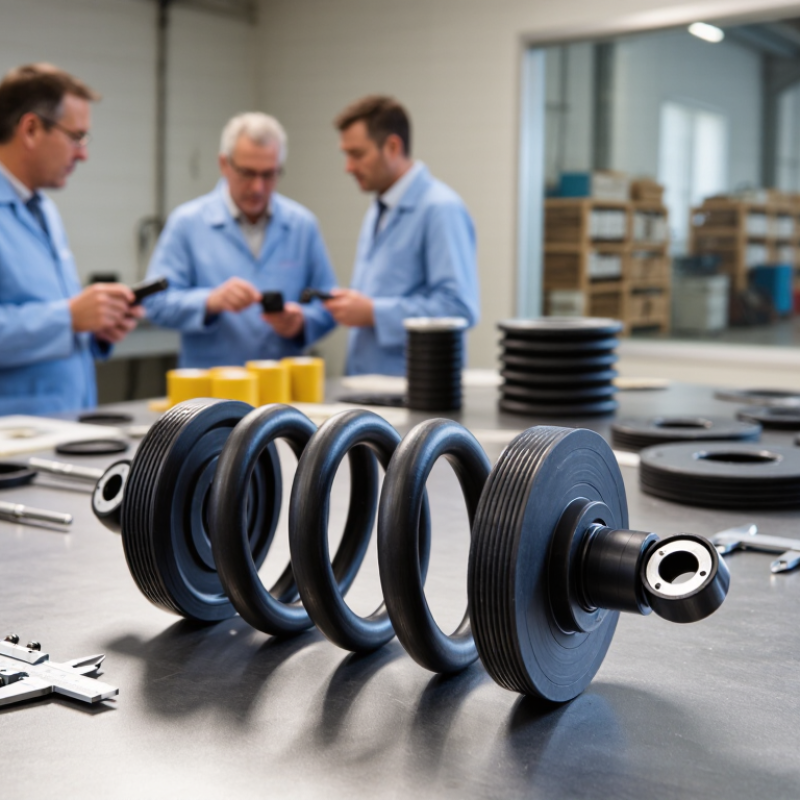
A custom rubber springs supplier designs and produces elastic components for specific mechanical requirements. Unlike standard springs, rubber springs can combine compression, tension, shear, and vibration isolation in one compact part. Their performance depends on rubber compound, geometry, hardness, and operating conditions.
The supplier’s role begins with understanding the application. Engineers review load ranges, movement, temperature, moisture, chemical exposure, and available space. They may recommend natural rubber, silicone, EPDM, or another suitable compound. Computer models help, but physical testing remains essential. A prototype can reveal unexpected deformation.
Good suppliers control more than production. They verify dimensions, bonding strength, hardness, and load performance against approved specifications. Clear drawings and inspection records support reliable communication between the supplier and equipment manufacturer. Experienced teams also consider installation errors, aging, and repeated loading. These details often decide whether a component performs consistently.
No design is perfect.
A first sample may be too stiff, too soft, or difficult to install. That result is useful, not embarrassing. Careful suppliers measure the failure, adjust the design, and test again. They should explain limitations honestly instead of promising performance without evidence. This practical cooperation helps customers select a rubber spring that fits both the machine and its working environment.

A custom rubber springs supplier develops elastic components for controlled movement, vibration isolation, and load support. The work begins with material selection, not mold design. Natural rubber offers strong resilience and fatigue resistance. EPDM performs well against weather, ozone, and water. NBR suits applications exposed to mineral oils. Silicone handles wide temperature changes, but it may tear more easily. No compound is perfect.
A supplier should match the rubber to load, temperature, chemicals, and required deflection. Hardness matters, but it does not tell the whole story. Compression set, tensile strength, tear resistance, and aging behavior also affect service life. Steel plates, threaded studs, or fabric layers can reinforce the spring. Bonding rubber to metal requires clean surfaces, controlled adhesive application, and accurate curing. Small contamination can cause early separation.
Manufacturing often uses compression, transfer, or injection molding. Compression molding works well for larger, straightforward spring shapes. Injection molding supports higher production volumes and consistent dimensions. After curing, technicians inspect flash, cracks, bonding, and critical measurements. Load-deflection testing reveals whether the spring behaves as the design predicts. It is a useful reality check. A drawing may show perfect geometry, yet rubber changes with temperature and time. Experienced suppliers therefore review tolerances, test conditions, and installation details before approving production. Even careful designs sometimes need adjustment after the first samples.
| Material | Typical Hardness | Approximate Service Temperature | Key Performance Characteristics | Common Manufacturing Methods | Suitable Applications |
|---|---|---|---|---|---|
| Natural Rubber (NR) | 40–90 Shore A | Approximately −50°C to +80°C | High elasticity, strong tensile strength, good fatigue resistance, and effective vibration isolation. | Compression molding Transfer molding | Dynamic vibration mounts, impact absorbers, flexible supports, and general-purpose rubber springs. |
| EPDM Rubber | 40–90 Shore A | Approximately −50°C to +150°C | Excellent resistance to ozone, weathering, water, steam, and aging; limited resistance to petroleum-based oils. | Compression molding Injection molding | Outdoor equipment, water systems, weather-exposed mounts, and automotive sealing or suspension components. |
| Nitrile Rubber (NBR) | 40–90 Shore A | Approximately −30°C to +120°C | Good resistance to mineral oils, fuels, and many hydraulic fluids; performance depends on the acrylonitrile content. | Compression molding Transfer molding Injection molding | Oil-resistant mounts, hydraulic equipment, industrial machinery, and fuel-handling systems. |
| Silicone Rubber (VMQ) | 20–80 Shore A | Approximately −60°C to +200°C | Wide temperature capability, good flexibility, low compression set, and strong resistance to ozone and ultraviolet exposure. | Compression molding Liquid silicone injection molding | Food-contact equipment, medical devices, electrical components, and high- or low-temperature applications. |
| Fluorocarbon Rubber (FKM) | 60–90 Shore A | Approximately −20°C to +200°C | Excellent resistance to fuels, mineral oils, many chemicals, and elevated temperatures; low-temperature flexibility is limited. | Compression molding Transfer molding Injection molding | Chemical processing equipment, aerospace systems, fuel systems, and high-temperature industrial machinery. |
| Polyurethane (AU/EU) | 60–95 Shore A | Approximately −40°C to +90°C | High abrasion resistance, high load capacity, strong tear resistance, and good energy absorption. | Cast molding Injection molding Compression molding | Heavy-duty bumpers, load-bearing pads, industrial springs, conveyor components, and wear-resistant supports. |
| Compression Molding | Process rather than a material | Depends on the selected elastomer and cure system | Uses a pre-measured rubber compound placed into a heated mold and compressed until vulcanized. | Heated mold, controlled pressure, and defined curing time | Low-to-medium production volumes, large rubber springs, thick sections, and products requiring relatively simple tooling. |
| Transfer Molding | Process rather than a material | Depends on the selected elastomer and cure system | Transfers a prepared rubber charge into closed cavities, offering improved control for inserts and multiple cavities. | Transfer pot, runners, heated mold, and controlled vulcanization | Rubber-to-metal bonded springs, complex geometries, embedded inserts, and medium-volume production. |
| Injection Molding | Process rather than a material | Depends on the selected elastomer and cure system | Injects rubber into a closed mold for repeatable filling, shorter cycle times, and efficient automated production. | Metering unit, injection screw or piston, heated mold, and automated curing control | High-volume production, consistent dimensions, detailed parts, and multi-cavity rubber spring components. |
| Rubber-to-Metal Bonding | Assembly and molding method | Depends on the rubber compound, metal substrate, and adhesive system | Combines an elastomer with steel, aluminum, or another substrate to transmit loads and control movement. | Surface preparation, primer and adhesive application, followed by molding and vulcanization | Engine mounts, suspension bushings, vibration isolators, structural mounts, and custom bonded springs. |
| Supplier Design and Validation Data | Application-specific | Defined by operating conditions | Custom suppliers normally evaluate load, deflection, frequency, temperature, chemical exposure, fatigue life, and installation constraints. | CAD modeling, finite element analysis, prototype molding, spring-rate testing, and fatigue testing | Products requiring a defined spring rate, controlled travel, noise reduction, shock absorption, or long service life. |
A custom rubber springs supplier develops elastic components for machines, vehicles, and equipment with unusual load requirements. The process begins with application details, including compression force, movement distance, temperature, moisture, and available space. Engineers then select a suitable rubber compound and define the spring’s geometry. Rubber hardness matters, but it is not the only consideration.
Using CAD models, specialists adjust wall thickness, height, contact surfaces, and mounting features. They often build an early prototype before final tooling. Physical testing measures compression, recovery, fatigue, and permanent deformation. A spring may perform well in a clean laboratory but weaken after heat, oil, or repeated cycling. That difference must be investigated. Not every first prototype works. That failure is useful. It may reveal inaccurate load data or an overly optimistic service-life estimate. Reliable suppliers document material batches, test conditions, design changes, and inspection results. This record supports consistent production and clearer technical decisions.
Tips: Provide real operating data, not only a drawing. Share peak loads, cycle frequency, temperature ranges, and nearby chemicals. Ask for test samples under realistic conditions. Check compression set after repeated use. A small design review can prevent costly tooling changes. Also, leave tolerance for installation errors; perfect alignment is rarely guaranteed in the field.
A custom rubber springs supplier develops elastomeric components for controlled movement, vibration isolation, and shock absorption. Unlike standard springs, these parts can match a machine’s load, travel, temperature, and installation space. Engineers may adjust rubber hardness, geometry, bonding, and dynamic stiffness. A drawing rarely tells the whole story. Real load cycles matter.
Rail systems use rubber springs beneath suspension units, seats, couplers, and track-support equipment. These components reduce transmitted vibration while tolerating repeated compression and shear. The UNIFE World Rail Market Study 2024 valued the global rail supply market at approximately €201.8 billion annually for 2024–2029. That scale increases demand for durable, maintainable isolation parts. However, rail performance depends on weather, contamination, and uneven loading. Laboratory results can look too clean.
Electric vehicles create another expanding application. Battery packs, motors, inverters, and compact cooling systems need isolation from vibration without wasting valuable space. The International Energy Agency reported nearly 14 million electric car sales worldwide in 2023. Custom rubber springs help manage these changing load paths, especially during rapid torque changes. Industrial presses, pumps, conveyors, and generators also use them to protect foundations and nearby equipment. The best supplier combines material testing, finite-element analysis, and fatigue validation. Field feedback remains essential. No calculation replaces inspection after months of service.
What Is a Custom Rubber Springs Supplier?
A custom rubber springs supplier designs and manufactures elastic components for controlled movement, vibration isolation, and load support. Unlike standard distributors, the supplier should convert your drawings, load cycles, and installation limits into a tested compound and geometry. That work demands more than catalog knowledge.
Material expertise matters. Ask whether the supplier can explain natural rubber, EPDM, silicone, and polyurethane performance under heat, oil, ozone, and repeated compression. The International Rubber Study Group’s 2024 industry outlook places global natural-rubber consumption at roughly 15 million tonnes annually. Large demand does not guarantee consistent quality. Request compound traceability, batch records, and test results for hardness, tensile strength, compression set, and dynamic fatigue. Short reports are useful. Vague claims are not.
Manufacturing control is equally important. Check whether the supplier follows ISO 3302-1 dimensional tolerances and uses documented inspection plans. Ask for samples molded with the proposed tooling, not merely similar parts. A reliable partner should explain mold maintenance, flash control, bonding methods, and realistic lead times. The U.S. Department of Energy notes that poorly controlled industrial vibration can increase maintenance needs and energy losses, so performance testing deserves attention. Require load-deflection curves at the intended temperature and frequency. Then review failure assumptions.
Price can mislead.
A low quotation may exclude tooling, validation, or replacement costs. In practice, I have seen technically acceptable drawings fail because mounting surfaces were ignored. That is an uncomfortable lesson. Supplier selection should include engineering communication, corrective-action speed, production capacity, and evidence from comparable applications. Endless certificates cannot replace a well-designed test.
A custom rubber springs supplier designs and manufactures elastomeric components for specific load, motion, vibration, and environmental requirements. The evaluation below presents an example procurement scorecard for comparing potential suppliers without using company or brand data.
Product quality and engineering capability usually receive the highest evaluation weights because they affect service life, dimensional consistency, and application performance. Certification, delivery reliability, cost control, and customization support should also be reviewed before approving a supplier.