Choosing Garment Labels for global sourcing is not a small packaging decision. A label carries fiber information, care instructions, origin details, brand identity, and traceability data. It also travels through factories, customs checks, warehouses, and retail shelves. One unclear line can create costly rework.
The scale of textile production makes accuracy more important. Textile Exchange reported approximately 124 million tonnes of global fiber production in 2023. Its Materials Market Report 2024 also warns that production may continue rising without stronger material choices and circular systems. This pressure affects labels directly. A recycled polyester claim should match verified supplier records, transaction certificates, and product specifications. Guesswork is risky. It happens more often than buyers admit.
Reliable sourcing teams should compare label fibers, print durability, adhesive performance, language needs, and testing records. ISO 3758 provides an international framework for care-label symbols, while GS1 guidance supports consistent product identification and data quality. Regional requirements can still differ, so suppliers should confirm current rules with qualified compliance professionals. Country-of-origin wording deserves particular attention. It must reflect the actual manufacturing process, not simply the shipping location.
A useful starting point is a physical sample review. Rub the label against a dark garment. Wash it repeatedly. Check whether the text remains readable after heat, moisture, and folding. Then match the approved sample against the purchase order. Small inconsistencies matter. The perfect label does not exist for every market, but a documented selection process improves reliability, customer trust, and responsible global sourcing.
How to Choose Garment Labels for Global Sourcing?
Defining the purpose of a garment label should happen before selecting its material or design. A care label gives washing instructions, while a fiber label identifies the textile composition. Size labels support fitting, and origin information can support customs documentation. Each label needs a clear job. Avoid adding decorative details that make essential information harder to read.
During product development, I review the garment’s fabric, construction, selling market, and expected washing conditions. A printed label may suit lightweight sportswear, while a woven label can provide stronger visual identification. Soft edges matter for children’s clothing and close-fitting garments. They should not scratch the skin. Small details matter.
Requirements vary between destinations, so sourcing teams should check current official rules before production. Confirm language, fiber terminology, care symbols, placement, durability, and required disclosures. Keep written specifications with approved artwork and sample records. This reduces mistakes between the factory, inspection team, and sewing line. I have seen labels approved visually but fail after repeated washing. That is an easy lesson to miss. Test the label on the finished garment, not only as a loose sample. Suppliers should also confirm ink performance, colorfastness, and attachment strength before bulk production. Slightly imperfect wording can create costly confusion, so every requirement deserves a second review.
Use this planning benchmark to prioritize label requirements before production. Compliance-related information should be verified against the regulations of each target market.
When sourcing garment labels globally, compare material, construction, and printing as one system. A soft satin label feels comfortable, but it may blur after repeated washing. Woven polyester usually delivers sharper small lettering and stronger edge stability. Cotton labels offer a natural hand, yet shrinkage can disturb final measurements. Textile Exchange’s Materials Market Report 2024 records 124 million tonnes of global fiber production in 2023. That scale makes material selection commercially significant.
Construction changes performance. Folded ends protect edges, while straight-cut labels reduce cost but may feel scratchy. Heat-transfer labels remove sewing, which suits lightweight performance garments. However, adhesion depends on fabric finish and washing temperature. Smithers’ Future of Digital Textile Printing to 2027 report forecasts digital textile printing growth from approximately 2.2 billion dollars in 2022 to 3.9 billion dollars in 2027. This supports efficient sampling and short runs, but digital printing is not automatically ideal for every label.
For printing, screen printing suits bold artwork and larger volumes. Flexographic printing can work efficiently on label rolls. Digital printing handles variable care text and small batches. Test dark ink on light polyester. Contrast often weakens on textured surfaces. Test before ordering. Request washing, rubbing, and heat-exposure tests using ISO 6330 or recognized AATCC methods. I once approved a clean sample, then discovered the folded seam hid two care symbols. That mistake was avoidable. Require final-size artwork proofs, lot identification, relevant fiber information, and packing photos before production. Rules differ by destination, so local compliance review remains necessary.
Choosing garment labels for global sourcing requires more than attractive typography. Each label must match the destination market’s textile rules. Fiber composition should use approved terminology and appear in the required language. Care instructions must be clear, durable, and supported by testing. Country-of-origin details may also be mandatory.
Chemical compliance deserves careful attention. Restricted substances can enter garments through dyes, finishes, prints, and adhesives. The United Nations Environment Programme reported that textiles create 2–8% of global greenhouse-gas emissions. This figure makes traceability more than paperwork. It connects labels with material records, supplier declarations, and production controls. European Commission textile policy documents also emphasize durability, repairability, and reliable product information. A label that looks correct may still fail during a market inspection.
Tips: Build a country-by-country label matrix before placing orders. Record fiber percentages, translation rules, care symbols, and documentation requirements. Keep test reports linked to each style and production batch. Ask suppliers to confirm changes in thread, dye, or finishing chemicals. Small changes matter. I have seen sourcing teams approve a label early, then discover missing language requirements during final inspection. That delay is avoidable, but not always. Review labels with a qualified compliance specialist, and treat report data as guidance rather than a substitute for current legal advice.
| Market or Region | Main Textile Labeling Framework | Mandatory Fiber Information | Label Placement and Presentation | Country of Origin | Care Information | Sourcing Compliance Check |
|---|---|---|---|---|---|---|
| European Union | Regulation (EU) No 1007/2011 on textile fibre names and related labeling. | Use authorized fibre names and list fibres in descending order by percentage. A fibre present at less than 5% may be omitted only under specified conditions. “100%,” “pure,” or “all” is restricted to products meeting the applicable composition rules. | Text must be legible, clearly visible, durable, and available in the official language or languages required by the destination Member State. | Origin marking may be required under applicable customs and consumer-information rules. Do not imply EU origin when the product was manufactured elsewhere. | Care labeling is not generally harmonized as a mandatory textile-label element under Regulation (EU) No 1007/2011. If care instructions are supplied, they should be accurate and understandable. | Verify the fibre declaration against laboratory or mill records, confirm language requirements for each sales country, and review any recycled-fibre or sustainability claim separately. |
| United Kingdom | Textile Products (Labelling and Fibre Composition) Regulations 2012, as amended for the UK market. | Use permitted fibre names and state the percentage composition in descending order. Decorative fibres and small amounts of non-textile components may be subject to specific exceptions. | Labels must be legible, durable, accessible, and attached to the product or packaging in a way that allows the consumer to see the information before purchase where required. | Apply UK customs and consumer-protection origin requirements. Ensure origin wording is not misleading, especially for cut-and-sew or substantially transformed goods. | Care symbols are widely used but should be accurate. ISO 3758 symbols may be used where the corresponding care treatment is supported by product testing. | Check whether the same label can serve both EU and UK markets; confirm language, origin, fibre names, and claims separately before production. |
| United States | Textile Fiber Products Identification Act and associated textile labeling rules; country-of-origin marking also follows customs requirements. | Disclose fibre content by generic fibre name and percentage by weight. Decorative or functional components may require separate treatment under the applicable rules. | The label must be conspicuous, legible, and accessible. It normally includes the responsible business identity or an assigned identification number in addition to fibre content and origin information. | Most imported textile products require country-of-origin marking in English, subject to customs exceptions and special rules for certain products. | Care instructions are generally required under the Care Labeling Rule for covered apparel and certain textile products. Instructions must have a reasonable basis and be safe for the product. | Confirm the US generic fibre terminology, responsible-party identification, origin marking, care testing, and any claims such as “organic,” “recycled,” or “Made in USA.” |
| Canada | Textile Labelling Act and Textile Labelling and Advertising Regulations. | Declare fibre content using prescribed fibre names and percentages by mass. The information must not be false or misleading. | Fibre information generally needs to be shown on a label attached to the article or in another permitted manner. English and French requirements may apply depending on the information and sales context. | Imported goods generally require country-of-origin information under customs marking rules. Use clear and accurate wording. | Care information should be accurate and should not contradict the product’s actual performance. Use tested instructions and recognized symbols where appropriate. | Review bilingual presentation, fibre percentages, origin marking, and the consistency between sewn-in labels, hangtags, packaging, and online product information. |
| Australia | Australian Consumer Law, customs requirements, and applicable product-safety provisions. | Fibre and material descriptions must be truthful and not misleading. Any composition statement should match the actual product and supporting records. | Information must be clear, legible, and available to consumers. A sewn-in label is commonly used for durability, although the exact format depends on the information being provided. | Imported products may require trade-description or customs origin information. Avoid claims that could create a false impression about Australian manufacture. | Care labeling is generally voluntary, but any care instruction supplied must be accurate, clear, and not likely to mislead consumers. | Check flammability or other product-specific safety requirements, validate care instructions, and ensure all claims remain consistent across packaging and digital listings. |
| Japan | Household Goods Quality Labeling Act and the Quality Labeling Regulations for Textile Goods. | Applicable textile goods generally require specified fibre composition information using recognized fibre names and prescribed percentage presentation. | Labeling is generally provided in Japanese and must be legible and durable. Certain product categories have additional prescribed display items. | Country-of-origin information may be required under customs and consumer-protection rules. Use accurate manufacturing-origin wording. | Care labeling commonly follows the Japanese care-label system, which is aligned with international care-symbol principles but may contain Japan-specific requirements. | Prepare a Japanese-language label, confirm category-specific requirements, verify fibre terminology, and obtain technical support for the correct care symbols. |
| China | Product standards including GB/T 29862 for textile fibre content and GB 5296.4 for textile product instructions for use, together with applicable mandatory safety standards. | Fibre content, product name, and other required information must comply with the applicable product standard. Percentage declarations must reflect the tested composition. | Labels generally need Chinese instructions and must be clear, durable, and attached or provided in the required form. Adult, infant, and children’s products may have additional safety information. | Origin information must be accurate and should not conflict with customs documentation or the product’s manufacturing records. | Care instructions should use the applicable Chinese care-label format and match the product’s tested washing, bleaching, drying, ironing, and professional-care limits. | Confirm the applicable GB standards, Chinese wording, safety-category marking, fibre test report, care symbols, and consistency between domestic and export labels. |
| International Good Practice | ISO 3758 provides a standardized system for care symbols; ISO 2076 and ISO 1833 series support fibre terminology and quantitative analysis. | Use internationally recognized fibre names only after checking the legal terminology of the destination market. Keep the exact tested blend and tolerance records. | Select labels that remain legible after the expected number of wash cycles. Use high-contrast printing, stable inks, secure attachment, and sufficient space for multilingual content. | Maintain a documented production route showing fibre sourcing, cutting, sewing, finishing, and the basis for every origin statement. | Base care symbols on garment testing, construction, trims, dyes, prints, and finishes rather than on fabric composition alone. | Create a destination-market label matrix, approve artwork before bulk production, retain test reports, and conduct random inspections of finished labels. |
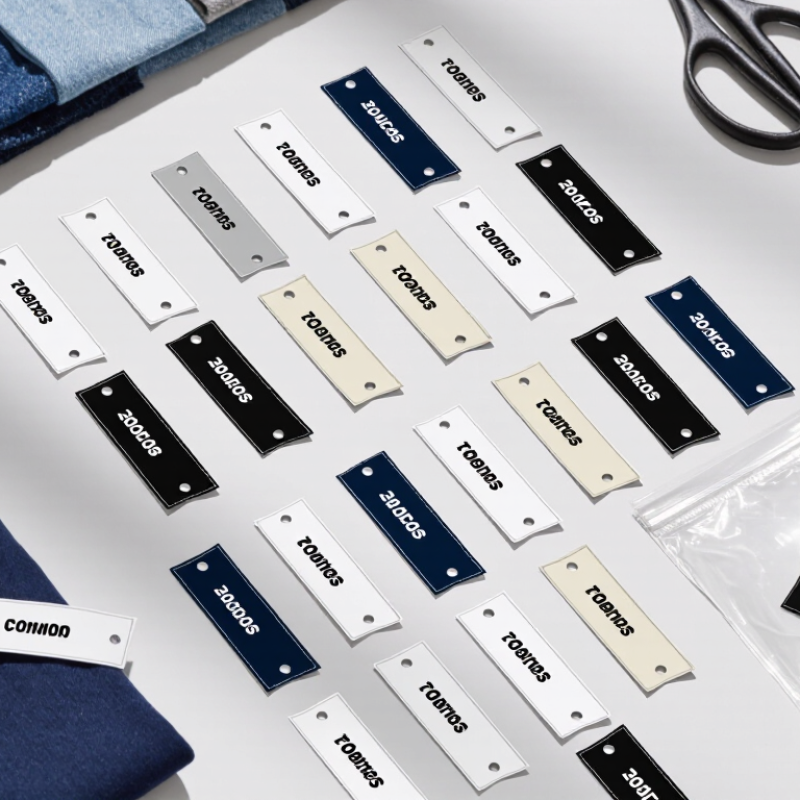
Supplier evaluation should begin with traceable evidence, not attractive samples. Request company registration, factory address, production photos, and recent audit records. ISO’s 2023 Survey recorded more than one million ISO 9001 certificates worldwide. Still, certification does not prove every shipment will meet your specification. Ask for the supplier’s quality manual, inspection records, corrective-action reports, and sample approval process.
Define measurable standards before negotiating price. Check label size, fabric composition, colorfastness, print clarity, adhesive strength, and wash durability. For woven labels, inspect edge finishing and thread density under bright light. For printed care labels, test rubbing and repeated washing. Use an agreed sampling plan, such as AQL, with clear acceptance limits. Textile Exchange’s 2024 Materials Market Report reported recycled fibers represented about 12% of global fiber production in 2023. Therefore, recycled-content claims need supporting material records, not vague declarations.
Production capacity requires more than a monthly quantity. Review machinery lists, staffing levels, peak-season utilization, minimum order quantities, and backup equipment. Request a trial order close to real production conditions. Measure lead time from artwork approval to packed cartons. A weak point in many sourcing checklists is ignoring capacity changes after approval. Ask how the supplier handles urgent reprints, damaged rolls, and color deviations. Leave room for doubt. The cheapest supplier may become expensive after delays, rework, and inconsistent labeling.
In sourcing practice, label cost is rarely just the unit price. Request quotes for artwork, tooling, sampling, revisions, packing, and freight separately. A woven label may cost little, but a small order can carry high setup charges. The 2023 World Bank Logistics Performance Index evaluates 139 economies across customs, infrastructure, and delivery reliability. Use those factors when comparing suppliers, not price alone. Confirm currency, payment milestones, production tolerance, and the named delivery term in writing.
Sampling needs a physical check. Inspect thread color under warehouse lighting, edge cutting, adhesive strength, and label dimensions. Keep an approved reference sample with a signed specification sheet.
Packaging also deserves attention. Ask for moisture protection, carton limits, inner-count labels, and recyclable materials where practical. Textile Exchange’s Materials Market Report 2024 recorded global fiber production at about 124 million tonnes in 2023, showing the scale of material choices and their tracking challenges. That makes clear labeling more important, though it does not remove every sourcing risk.
Tips: Compare landed cost, not factory price. Ask for two freight scenarios. Confirm who handles export documents and destination charges. Test one small shipment before scaling. I still find forecasts imperfect, especially during peak seasons. That is a weakness worth admitting. Build a modest buffer for sampling delays, carton changes, and customs questions. A clear email trail often protects the project better than a confident promise.