What Are the Best Sliding French Doors from China?
Choosing the best sliding French doors from China requires more than comparing catalog prices. The right choice depends on performance, manufacturing experience, hardware quality, and dependable communication. A beautiful door can still disappoint if its rollers drag, seals shrink, or water enters during heavy rain.
Building-science consultant Steve Baczek often says, “A window is a hole in the wall.” His point applies to sliding French doors too. This opening must control air, water, heat, and daily movement. For that reason, this guide examines aluminum profiles, glass specifications, thermal breaks, drainage paths, locking systems, and roller durability. These details matter in a real home. Imagine a wide door facing a garden, with wet shoes crossing the threshold and sunlight heating the glass each afternoon.
Chinese manufacturers offer broad customization and competitive production capacity. Some provide excellent fabrication, careful packaging, and useful technical support. Others rely on attractive renderings and vague performance claims. That difference is important. Factory visits, sample inspections, test reports, and clear drawings can reveal more than a polished website. Still, even a careful review has limits. A sample may perform well, while later production needs closer monitoring.
The following outline compares suitable door types, reliable supplier indicators, installation requirements, and long-term maintenance concerns. It also considers climate, opening size, budget, and project expectations. No single model fits every building. The best sliding French doors are the ones that balance appearance with measured performance, practical service, and honest manufacturing evidence.
What Are Sliding French Doors and How Do They Work?
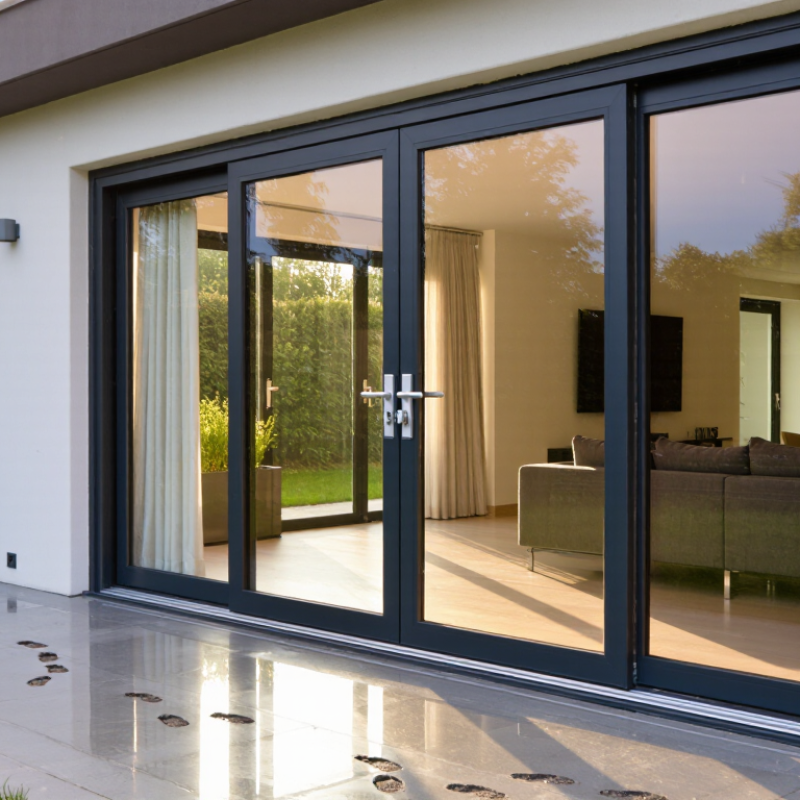
Sliding French doors combine the symmetrical appearance of French doors with a horizontal sliding mechanism. Two broad panels usually meet at the center, creating a balanced opening. One panel may remain fixed, while the other moves along a top and bottom track. In larger systems, both panels slide away from the center.
The rollers carry the panel’s weight and guide its movement. A center interlock reduces air leakage when the doors close. Multi-point locks can improve security and compression. However, poor alignment causes dragging, rattling, or uneven gaps. I have found that track drainage matters more than many buyers expect, especially after heavy rain.
Performance depends on frame material, glazing, seals, and installation quality. The U.S. Department of Energy reports that windows account for roughly 25–30% of residential heating and cooling energy use. This figure includes glazed doors, so low-emissivity glass and insulated frames deserve close attention. The National Fenestration Rating Council evaluates U-factor, solar heat gain coefficient, and visible transmittance. Lower U-factor generally means better insulation, while SHGC should match the local climate. A high SHGC may help in cold regions but increase summer cooling demand. For doors manufactured in China, request independent test reports, air-infiltration results, water-penetration testing, and thermal ratings. Factory photographs are useful, but they are not proof of field performance. Even a well-designed door can underperform when the opening is not square.
Which Materials and Designs Suit Different Home Styles?
The best sliding French doors depend on the home’s architecture, climate, and daily use. Aluminum suits modern homes with clean lines and large glass panels. Its slim frames admit more daylight and resist warping. Choose thermal-break aluminum for colder regions. Standard aluminum may feel chilly near the frame.
Timber works beautifully in cottages, farmhouses, and traditional interiors. Its grain adds warmth beside brick, stone, or painted walls. However, timber needs regular sealing, especially in humid or rainy areas. uPVC offers practical value for family homes. It provides low maintenance, reliable insulation, and flexible colors. It can look less refined in a luxury setting. Looks matter. Not always.
For coastal houses, powder-coated aluminum or well-tested uPVC can handle moisture better than untreated wood. Low-E double glazing helps reduce heat loss and strong summer glare. Consider clear glass for open views, or textured glass for privacy near bathrooms and bedrooms. A flush track suits minimalist interiors, but it must include effective drainage. I once underestimated the importance of the handle position; awkward hardware can make a beautiful door frustrating. When sourcing from China, request section drawings, glass specifications, drainage details, and independent performance reports. Check air leakage, water resistance, and wind-load testing for your local conditions. Samples reveal finish quality, but they cannot replace documented testing.
What Are the Best Sliding French Doors from China?
Material and design suitability for different home styles
The chart uses a comparative 1–5 design-fit score based on commonly observed material characteristics:
aluminum offers slim profiles for modern homes, uPVC provides practical low-maintenance performance,
wood supports traditional and farmhouse aesthetics, and fiberglass combines durability with a natural-looking finish.
Actual thermal performance depends on glazing, frame construction, weather seals, installation quality, and local climate.
How Can You Compare Chinese Sliding French Door Manufacturers?
When comparing Chinese sliding French door manufacturers, begin with factory evidence, not attractive catalog images. The best option depends on your climate, opening size, and installation method.
Request a physical sample of the frame, rollers, locks, and glass. Check whether the panels slide smoothly without lifting or scraping. Ask for test reports covering air leakage, water resistance, wind pressure, thermal performance, and sound reduction. Verify the testing laboratory and report dates. A certificate without traceable details is weak evidence.
Review the manufacturer’s aluminum alloy, surface finish, drainage design, and glass configuration. Coastal projects may need stronger corrosion protection. Cold regions require careful attention to thermal breaks and glazing seals. Ask how replacement rollers and gaskets are supplied after installation. Lead time matters, but consistency matters more. Compare quotations line by line, including packaging, hardware, customization, inspection, and delivery terms.
Factory audits can reveal useful details. Look for production records, quality checkpoints, and protective packaging around corners. Request references for similar projects, preferably with installation photographs. Communication also deserves a score. Slow replies during sampling may become serious delays later. I would not judge a manufacturer from one perfect sample alone. Batch quality can vary, and that risk is easy to overlook. Allow time for an independent pre-shipment inspection. Be willing to revise the specification.
How Do Pricing, Customization, Shipping, and Installation Differ?
Choosing the best sliding French doors from China requires more than comparing catalog prices. A practical evaluation should include frame material, glass specification, hardware quality, and after-sales support. Factory pricing may appear attractive, but the final cost includes packaging, inland delivery, freight, insurance, and import duties. A detailed quotation should list every item clearly. Hidden fees can erase the original savings.
Customization is a major advantage. Buyers can often request exact widths, opening directions, colors, glass thicknesses, screens, and thermal breaks. However, unusual dimensions may increase tooling costs and production time. Ask for shop drawings before approval. Check handle positions and drainage details carefully. Small mistakes become expensive after production. I once reviewed a project where the selected threshold did not match the floor height. The doors worked, but the transition looked poorly planned.
Shipping protection matters for large glass panels. Strong crates, corner guards, moisture barriers, and photographic inspection records reduce disputes. Confirm the shipping terms and required documents before payment. Installation differs by region and building structure. A local installer must verify the opening, plumb the frame, seal the perimeter, and adjust the rollers. Factory instructions may be useful, but they cannot replace site experience. Budget for possible rework. It is not always included.